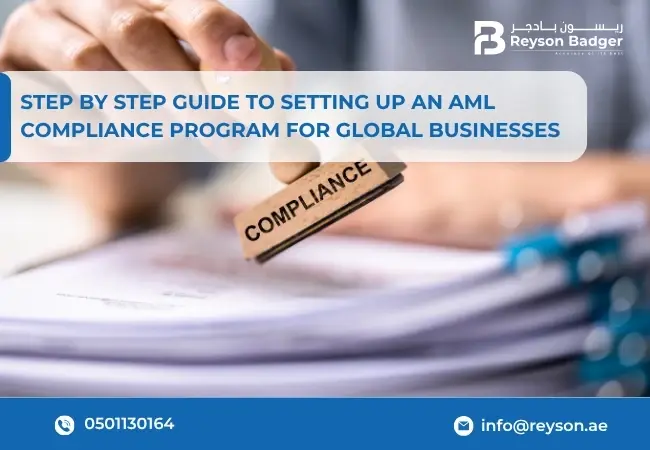


In today’s global economy, financial transactions move across borders in seconds but so do financial crimes. Money laundering, terrorist financing, and fraud have become more sophisticated, making Anti-Money Laundering (AML) compliance a core responsibility for every business that handles financial activities.
An AML Compliance Program provides a structured, risk-based approach to detect and prevent these crimes while maintaining transparency and trust.
In this guide, you’ll learn:
- What an AML compliance program is?
- Why is it essential for global businesses?
- And a step-by-step process to set up an effective AML framework aligned with international standards
What is an AML Compliance Program?
An AML compliance program is a structured set of policies, procedures, and controls designed to prevent, detect, and report suspicious financial activities within an organization.
A sound AML program is risk-based, meaning it adapts to the level of risk posed by specific customers, products, or geographic regions. It ensures compliance with local and international laws while safeguarding the business from becoming a conduit for financial crimes.
The program typically includes:
- Appointment of a qualified AML Compliance Officer
- Risk assessments and mitigation plans
- Know Your Customer (KYC) / Customer Due Diligence (CDD) and Enhanced Due Diligence (EDD)
- Continuous transaction monitoring and reporting
- Regular training and independent audits
Why Global Businesses Need AML Compliance Program?
Operating across borders brings not just opportunities but regulatory complexities. Here’s why an AML compliance program is critical for global enterprises:
- Avoid Legal Penalties: Regulators worldwide from the Central Bank of UAE to FINRA and the FATF impose severe penalties for non-compliance. A well-established AML program helps businesses meet these standards and avoid costly sanctions or license revocations.
- Build Trust and Reputation: Compliance strengthens credibility. Clients, investors, and partners are more likely to engage with companies that demonstrate strong ethical and regulatory governance.
- Protect the Business from Financial Crimes: Without preventive controls, businesses can unknowingly facilitate money laundering or fraud. An AML framework ensures early detection of suspicious activities, preventing reputational and operational damage.
Key Components of an AML Program
To comply effectively, your AML program should include these key components:
AML Compliance Officer: Appoint a dedicated compliance officer with authority, independence, and adequate resources. This individual oversees implementation, training, reporting, and serves as a liaison with regulators
Create Clear, Risk Based Policies and Procedures: Documented policies should define how your business identifies, mitigates, and reports risks. These must be risk-based, adapting to the nature, size, and geography of operations a critical principle outlined by global AML standards.
Implement KYC and Due Diligence (CDD/EDD)
The Know Your Customer (KYC) process involves verifying customer identities and understanding the purpose and nature of their business.
- CDD (Customer Due Diligence): Standard verification for all customers.
- EDD (Enhanced Due Diligence): Applied to high-risk customers, such as PEPs (Politically Exposed Persons) or those from high-risk jurisdictions. Include Beneficial Ownership (UBO) verification to ensure you know who ultimately owns or controls a customer entity.
Step-by-Step Process to Set Up an AML Compliance Program
Step 1: Conduct a Comprehensive Risk Assessment
Identify potential money laundering and terrorist financing risks specific to your operations customer types, products, delivery channels, and jurisdictions. Adopt a risk-based approach, applying stronger controls where the risk is higher.
Step 2: Develop AML Policies and Procedures
Translate your risk findings into actionable policies. Define how you’ll handle onboarding, record-keeping, transaction monitoring, and reporting. Ensure the program receives written approval from senior management or the board, establishing top-level accountability.
Step 3: Implement KYC, CDD, and EDD
Design a tiered verification process. Standard customers undergo CDD, while higher-risk clients trigger EDD, requiring deeper investigation into the source of funds, business purpose, and ownership structures.
Step 4: Deploy Monitoring and Reporting Systems
Use AML technology platforms or internal review systems to flag abnormal activity. Develop escalation procedures for suspicious cases and maintain accurate audit trails.
Step 5: Provide Regular Staff Training
Your employees are the first line of defense. Conduct ongoing AML workshops, online courses, and refresher sessions updating them on new typologies and red-flag indicators.
Step 6: Conduct Independent Testing and Continuous Updates
Beyond internal reviews, schedule independent audits annually or semi-annually. Regularly update your AML framework in response to regulatory changes, emerging risks, and technological advancements.
Conclusion
Reyson Badger offers end-to-end AML compliance services to businesses worldwide helping you establish, manage, and optimize your anti-money laundering program with precision and global expertise. Choose Reyson Badger to ensure your organization meets every international AML standard with confidence and efficiency.