Internal Audit for UAE Real Estate and Construction Companies
27-Jan-2026
Expert Audits Designed for UAE Businesses
Audit Services in UAE
The United Arab Emirates (UAE) is a thriving hub for businesses of all sizes. When it comes to ensuring compliance and financial transparency, Audit Services in Dubai play a pivotal role. With the dynamic business landscape of the United Arab Emirates, companies rely on these services to maintain integrity and trustworthiness in their operations.
With its strategic location and commitment to economic growth, the UAE offers a dynamic environment for entrepreneurs and established companies alike. However, to ensure long-term success, maintaining financial transparency and adhering to regulations is crucial.
What is Auditing?
An audit is an independent and systematic examination of a company's financial records. A qualified auditor assesses the accuracy and fairness of financial statements, providing an objective opinion on whether they represent a true and fair view of the company's financial health. Audit services ensure compliance with regulatory standards and enhance stakeholder confidence.
What are Audit Services?
Audit services mainly include the assessment of a company's financial records, operations, and other internal controls to guarantee accuracy, regulatory compliance, and the integrity of financial reporting. These services help identify potential risks, inefficiencies, and areas for improvement. This gives investors, regulators, and management greater confidence in the financial health and transparency.
Types of Audit Services in Dubai
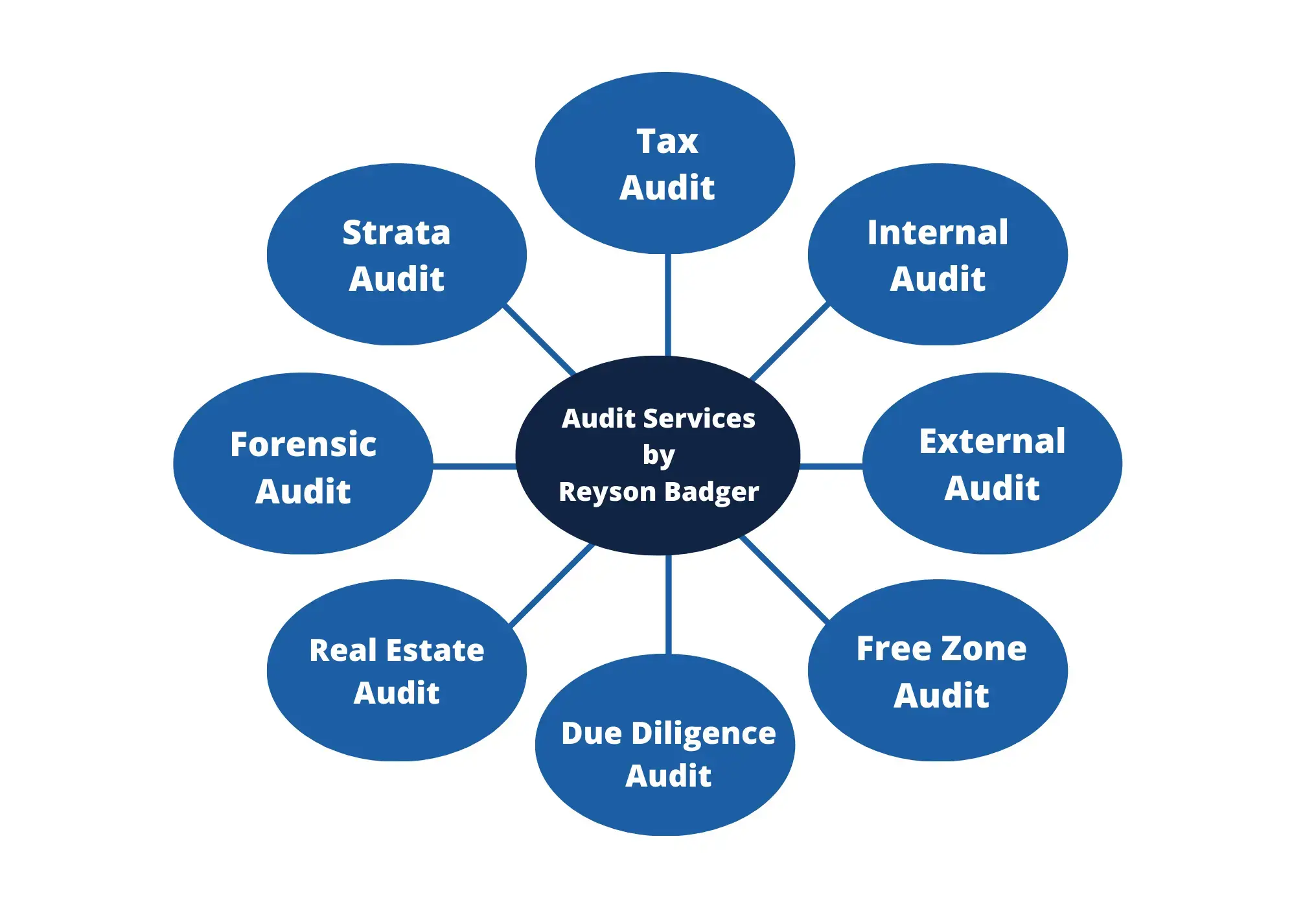
Internal Audit Services
An internal audit serves to pinpoint any weaknesses in internal controls and assess operational efficiency and regulatory compliance. While internal audits can be conducted by individuals within the company, many opt to engage the expertise of companies providing internal audit services. This process ensures that the business remains on a trajectory aligned with its objectives.
Internal audits play a crucial role in monitoring company effectiveness, pinpointing areas for improvement, and ensuring adherence to government laws and regulations. This entails reviewing and validating financial information, evaluating risk management protocols, and scrutinizing operational procedures.
External Audit Services
An external audit entails a methodical examination of a company's financial statements to assure stakeholders of their accuracy and the absence of significant errors. Throughout this process, external auditors meticulously scrutinize transactions and methodologies, sometimes seeking independent verification from entities such as banks, customers, and suppliers. A comprehensive audit report is then submitted upon conclusion, offering valuable insights into a company's financial well-being.
Explore the key differences in Audit Services in the UAE
Audit in Free Zones
Companies registered in specified areas are obligated by Free Zone Authorities to furnish annual audit reports, a prerequisite for trade license renewal. Adherence to this reporting requirement is imperative, as failure to comply may result in financial penalties. It is thus advisable to have your company in free zones audited in accordance with the prescribed guidelines of the respective zone. Reyson Badger delivers expert audit services across the UAE’s key free zones , ensuring compliance and reliability for businesses of all sizes.
Tax Audit Services
Tax audits conducted by the Federal Tax Authority (FTA) in Dubai ensure timely settlement of outstanding debts and recovery of all due taxes for government coffers. Compliance with tax regulations, including issuance of proper Tax Invoices and receipt of eligible VAT credits, is meticulously verified. Businesses can seek assistance from registered tax agents to navigate pre- and post-audit processes, ensuring adherence to VAT compliance standards established by the FTA.
Due Diligence Audit Services
A Due Diligence Audit is performed as part of the process of evaluating a company's financial well-being and effectiveness. By doing so, the company is ensured that there are no hidden liabilities within the organization. A thorough due diligence process helps owners make informed decisions for the present and the future, thereby preventing them from incurring financial losses.
Strata Auditing Services
As leading Strata Auditors in Dubai , we ensure client compliance with Real Estate Regulatory Agency (RERA) regulations and requirements. Our meticulous audits ensure that financial statements accurately reflect the company's financial position, assets, liabilities, and equity in accordance with UAE accounting principles.
Forensic Audit Services
Given the increasing prevalence of corporate fraud, forensic audits have gained prominence for investigating financial crimes and commercial conflicts. In Dubai, forensic auditors play a pivotal role in uncovering fraud, identifying the root causes of financial issues, and gathering evidence for potential legal action. From financial fraud to bankruptcy disputes, forensic audits offer comprehensive investigative services, leveraging evidence admissible in court proceedings.
Financial Audit Services
A financial audit is the complete assessment of a company's financial statements for accuracy, completeness, and conformity to requirements of accounting. It includes transaction checking and analysis of financial data, in addition to reviewing internal controls.
Risk Assessment Services
Risk assessment & evaluation involves figuring out, examining, and evaluating potential risks that would impact a company's operations, monetary overall performance, or reputation. It facilitates companies to prioritize risks and broaden powerful mitigation strategies.
Operational Audit Services
An operational audit makes a speciality of evaluating the efficiency and effectiveness of a company's operations. It assesses processes, procedures, and controls to identify opportunities for development and decrease in expenses.
Investigation Audit Services
An investigation audit is a totally technical form of audit related to the examination of a difficulty or allegation about a few wrongdoing through fraud, theft, or misconduct. An investigation audit entails gathering and analyzing proof in pursuit of establishing records.
Information System Audit Services
An information system audit assesses an enterprise’s information systems’ security, reliability, and effectiveness. It evaluates controls, identifies vulnerabilities, and recommends measures to protect sensitive records.
Stock Audit Services
A stock audit verifies the accuracy and completeness of a company's stock record. It includes physically counting inventory items, comparing them to records, and identifying discrepancies.
Real Estate Audit Services
A real estate audit completely assesses a corporation's financial facts, asset valuations, lease agreements, and compliance with applicable legal guidelines and laws. It aids to assure that the organization's real estate assets are managed successfully and that its financial reporting is correct.
Benefits of Audit Services in Dubai
Engaging a reputable audit firm in the UAE offers several advantages:
- Expertise : Experienced auditors possess a deep understanding of UAE's accounting standards and regulations. They can guide you through the audit process smoothly and efficiently.
- Objectivity : An independent auditor maintains impartiality, providing an unbiased assessment of your financial statements. This strengthens the credibility of the audit report.
- Specialized Services : Many audit firms offer additional services beyond the standard audit, such as internal audit, tax advisory, and risk management consulting. This comprehensive approach empowers businesses to address a wide range of financial needs.
- Business Efficiency: Audit services in UAE offer key benefits like fraud detection, Cost-cutting, valuable business knowledge, and tax financial savings, supporting organizations operating successfully.
- Compliance & Trust: Audit services in UAE strengthen stakeholder confidence and ensure regulatory compliance, allowing organizations to build trust and uphold transparency..
Reasons to Conduct an Audit in Dubai
Compliance with Local Laws
Compliance with Local laws is necessary for firms operating in Dubai to follow the financial regulations and legislation set by the UAE government and local authorities. Audit services in the UAE ensure that a company's financial statements accurately reflect its financial status in line with applicable legislation. This covers accounting standards, tax legislation, reporting requirements, and other financial restrictions unique to Dubai and the larger UAE region.
Audits serve to ensure that a company's financial operations comply with these requirements, lowering the risk of noncompliance and related penalties, and assisting organizations function legally and ethically in Dubai.
Fraud Prevention
"Fraud Prevention" refers to the detection and mitigation of fraudulent actions within a company's financial processes. Auditors have an important role in discovering anomalies and irregularities, and suspicious transactions that could suggest fraudulent activities.
To detect potential fraud, auditors use a variety of procedures, including scrutinizing financial records, evaluating transactional data, conducting interviews, and doing internal control assessments. Auditors can detect red flags and areas of vulnerability to fraudulent activity by reviewing financial accounts and operational processes.
The objective of fraud prevention through auditing is: to prevent people from committing fraud by building effective internal controls and to detect and eliminate fraudulent behavior as soon as it occurs. Businesses that detect fraud early can reduce financial losses, protect assets, and maintain their brand and integrity in the marketplace. Finally, strong fraud prevention procedures help to retain stakeholders' trust and confidence in the company's financial integrity and reliability.
Credibility
Credibility refers to the integrity and accuracy of a company's financial records and declarations. An audit performed by an independent and certified auditor gives an objective assessment of the company's financial health and the reliability of its financial records.
Audits improve the dependability of a company's financial information by checking its precision and conformity with applicable laws, regulations, and accounting standards. Audited financial statements help stakeholders, such as creditors, investors, regulatory authorities, and the general public, make educated decisions regarding the company.
Operational Improvement
Audit Services use insights gathered from the audit to improve the efficiency and effectiveness of an organization's operations. Auditors look at not only financial records but also operational procedures and internal controls in order to find areas for improvement.
The goal of operational improvement through auditing is to help firms run more effectively and efficiently, maximize value for stakeholders, and achieve long-term success.
Financial Health
Financial health signifies a company's general well-being and financial stability. Financial health assessment involves examining several aspects of the financial health of a business, including liquidity, solvency, and profitability.
A company's long-term existence and sustainability rely heavily on maintaining excellent financial health. Audits are critical in guaranteeing the quality and reliability of financial information, which is required for making informed business decisions, recruiting investors, obtaining funding, and establishing confidence with stakeholders.
Finally, by fostering openness, accountability, and effective fiscal practices, audits help to improve the financial health and stability of organizations.
Risk Management
Risk management is the identification, assessment, and mitigation of risks that may influence the financial health of a business, operations, or reputation. Auditors help firms assess and manage a wide range of risks, including financial, operational, regulatory, and reputational hazards.
Auditors assist businesses in reducing the chance of undesirable outcomes such as monetary losses, regulatory penalties, legal liabilities, or reputational damage by proactively identifying and managing risks. They help execute risk mitigation techniques and controls that protect assets, improve operational efficiency, and assure regulatory compliance.
Risk management through auditing adds to a company's overall stability, sustainability, and success by limiting risks while maximizing chances for growth and value generation.
Quality Assurance
Auditors use quality assurance measures to ensure that financial statements are prepared in accordance with applicable accounting standards, laws, and regulations.
Quality assurance in auditing protects the integrity of financial information, builds trust in the company's financial reporting, and enables stakeholders to make educated decisions. It also strengthens the integrity and dependability of the organization's financial operations, generating conviction in your business.
Investor Confidence
Investor confidence relates to investors' trust and confidence in a company's financial performance, management, and long-term prospects. Auditing strengthens investor confidence by independently verifying and validating an organization's financial statements and reporting methods.
The confidence of investors is increased when auditors discover and address any anomalies, abnormalities, or areas of concern in the financial reports. Auditors help to reduce uncertainty and reassure investors about the company's financial credibility and stability by flagging potential risks and making guidelines for improvement.
Regulatory Compliance
Regulatory compliance makes sure a company's financial statements and reporting methods are in accordance with applicable legal and regulatory standards.
Failure to comply with regulatory demands can lead to legal implications, monetary fines, reputational harm, and a loss of trust among stakeholders. Audits can identify and resolve noncompliance issues in order to avoid potential penalties.
Auditors play an important role in determining whether a firm complies with numerous legal frameworks, such as local legislation, accounting standards, and industry-specific rules. They analyze financial records, transactions, and reporting methods to ensure that the company's activities comply with applicable regulatory standards.
Market Reputation
Market reputation refers to a company's view and reverence inside its industry and among its stakeholders, which include consumers, investors, partners, and competitors. The company's commitment to transparency, ethics, and strong financial management has an impact on its market reputation.
A favorable market reputation is founded on trust and reliability, which are maintained by audits that validate regulatory compliance, accounting standard adherence, and successful internal control execution. Companies that continuously demonstrate transparency and accountability in their financial reporting tend to have a positive reputation in the market.
In contrast, a lack of transparency or occurrences of financial irregularities can harm a company's market reputation and undermine stakeholder trust. Negative opinions of a company's financial integrity can discourage investors, reduce customer loyalty, and jeopardize commercial alliances.
Strategic Planning
Companies could use audit findings and insights to guide and reinforce a company's strategic decision-making processes.
Strategic Planning helps ensure that a company's resources are aligned with its overall vision and goals, increasing the possibility of attaining long-term growth and competitive advantage. It lets management successfully respond to changing market conditions, predict future obstacles, and capitalize on new possibilities.
Resource Allocation
Resource allocation ensures that these assets are used efficiently and effectively to meet the organization's goals while reducing loss and increasing value.
Effective resource allocation, aided by auditing, enables businesses to make the most of their existing resources, increase productivity, and attain strategic goals more efficiently. It also helps to reduce the risks associated with resource misuse and promotes an accountability and transparency culture inside the firm.
Internal Control
Auditors review internal controls by testing procedures, analyzing documentation, and interviewing staff to ensure that controls are effective and consistent. They detect flaws or inadequacies in internal controls and make recommendations for improvements to reduce risks and strengthen control mechanisms.
Proper internal controls contribute to the quality and dependability of financial information, prevent unauthorized activities, and protect the assets of the company from misuse or theft. They also improve operational efficiency by streamlining operations and lowering the risk of errors or inefficiencies.
Tax Compliance
Tax compliance signifies guaranteeing that a corporation correctly calculates, reports, and remits taxes in conformity with applicable tax rules and regulations.
Audits assist businesses in proactively identifying and addressing tax compliance concerns, lowering the risk of penalties, and ensuring that tax obligations are met on time and accurately. Audits help to protect a company's reputation and integrity in the business community by encouraging transparency and accountability in the filing of taxes.
Business Valuation
Business valuation involves determining the value of a company's assets, liabilities, and overall operations using various valuation methodologies and criteria.
Business valuation backed up by auditing enables stakeholders to make informed decisions about purchasing, selling, or investing in a company. It guarantees that deals are completed at an appropriate price and that stakeholders understand the company's financial situation and potential outcomes in the future.
Legal Protection
Auditing provides legal protection by shielding a corporation from possible lawsuits, fines, penalties, or other legal consequences caused by mistakes or shortcomings in financial reporting. Auditors help to reduce legal risks by guaranteeing the quality and reliability of financial information and encouraging transparency and responsibility in the company's operations.
In Dubai, where government oversight and legal standards are strict, auditing provides legal protection that is critical for companies to maintain compliance and mitigate legal risks.
Operational Transparency
Transparency and accountability are highly valued in Dubai, therefore for enterprises to gain the trust of stakeholders and adhere to regulatory requirements, operational transparency validated by audits is crucial.
Performance Assessment
A company's financial stability, operational effectiveness, and competitive positioning can all be evaluated through performance assessment through auditing. In order to improve overall performance and accomplish strategic objectives, it assists management in identifying areas for optimization, allocating resources efficiently, and making well-informed decisions.
Through performance assessment, businesses may capitalize on strengths, fix weaknesses, and adjust to shifting market conditions—all of which ultimately contribute to sustained profitability and sustainability.
Continuous Improvement
Auditing allows for continuous improvement by applying corrective measures, process innovations, and organizational changes to solve flaws and optimize performance. It demands a proactive attitude to monitoring and analyzing the effectiveness of existing modifications, as well as making additional adjustments as needed.
Due Diligence
Due diligence assisted by auditing assists prospective purchasers, investors, or lenders in making informed judgments by offering a thorough picture of the target company's financial condition, performance, and risks. It reduces the risk of unexpected liabilities, fraud, or misrepresentations and makes transactions run more smoothly by identifying potential impediments or issues early on.
Due Diligence Audits allow stakeholders to examine the viability and possible returns of a transaction or investment possibilities, allowing them to make intelligent choices that are consistent with their business goals and risk tolerance.
Audit Process in Dubai, UAE
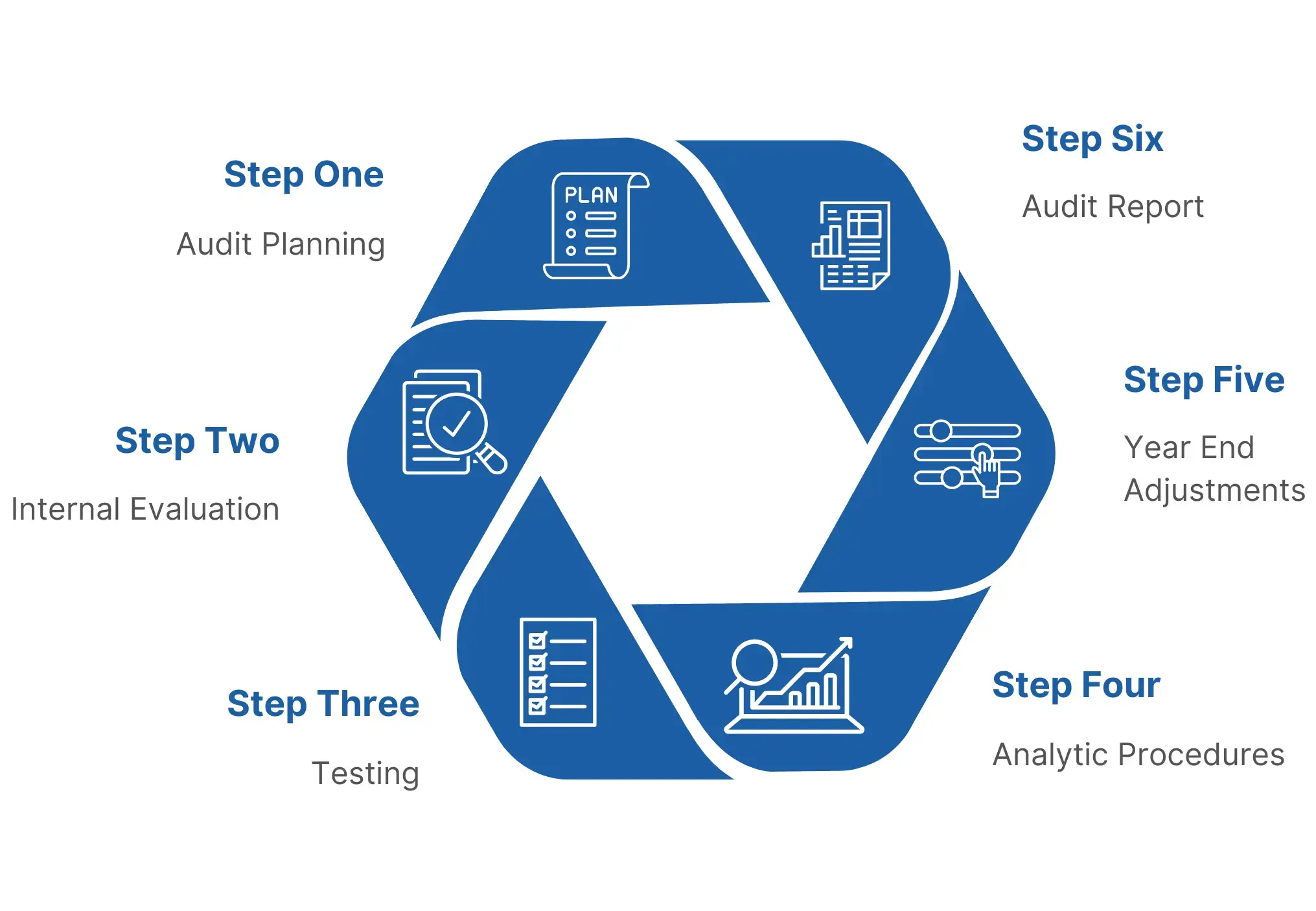
The typical audit process in the UAE follows a structured approach
- Planning and Risk Assessment : The auditor gathers information about your business, understands its operations, and assesses potential risks of material misstatement in financial statements.
- Internal Controls Evaluation : The auditor evaluates the effectiveness of your internal controls over financial reporting.
- Testing Procedures : The auditor performs various tests and procedures to verify the accuracy and completeness of your financial records.
- Analytical Procedures : The auditor analyzes financial data to identify any anomalies or inconsistencies that might warrant further investigation.
- Year-End Adjustments : The auditor assists in making necessary year-end adjustments to ensure your financial statements accurately reflect your company's position.
- Audit Report Issuance : Upon completion of the audit, the auditor issues a report expressing an opinion on whether the financial statements are free from material misstatement.
Advantages of conducting an Audit services
Financial Auditing Services in Dubai
To guarantee the accuracy and transparency of the business's finances, Reyson Badger provides the best financial audit services in Dubai. A company's financial statement is evaluated during a financial audit in the United Arab Emirates. The outcome of the financial audit is an audit report that has been attested by the auditor, proving that the business submitted a true, impartial, and fair financial statement.
Financial Audit Services
The primary objective of a financial audit is to ensure the credibility and transparency of a company's financial position. By reviewing financial statements, auditors can identify issues in internal management and uncover insights that help businesses address both current and future challenges. A financial statement audit ensures that financial statements comply with IFRS standards. Our financial auditors will carefully and thoroughly review the finances in order to produce a true and accurate financial statement audit report.
Types of Financial Statements
Various types of financial statements, including:
- Balance Sheet: Showcases a company’s financial position, detailing assets, liabilities, and equities.
- Income Statement: Also known as the profit or loss statement, this reveals a company’s financial performance based on net profit or loss.
- Cash Flow Statement: Highlights the movement of cash and bank balances across operating, investing, and financing activities.
- Statement of Changes in Equity: Shows the movements in the company’s equity, tracking the impact of income, dividends, gains, or losses.
Importance of Financial Audit Services in Dubai
An investor or shareholder's confidence must be maintained by a high-quality and accurate financial statement audit. Here are key reasons why these services are essential:
- Accuracy and Reliability: Audits provide an independent assessment of financial statements, assuring stakeholders that the information is accurate and reliable. This is particularly important for small businesses that may lack in house accounting expertise.
- Regulatory Compliance: Dubai's regulatory environment mandates compliance with various laws and standards, including the Companies Law and International Financial Reporting Standards (IFRS). Financial audits help businesses meet these requirements, thereby avoiding consequences from the law.
- Investor Confidence: Transparent financial practices encourage trust among investors. Regular audits signal to potential investors that a company is financially sound, encouraging investment and growth opportunities.
- Fraud Prevention: Audits are essential for identifying vulnerabilities in financial practices, which helps reduce the risk of fraud. They serve as a preventive measure against financial mishandling.
- Improved Decision Making: Accurate and reliable financial information from audits empowers business owners to make informed decisions that can lead to improved operational efficiency and strategic planning.
In general, the offer of financial audit services is critical to maintaining the values of Dubai's business community, encouraging transparency, and creating a reliable business environment.
What is the Audit Period in UAE?
The audit period in the UAE typically corresponds to a company's financial year. However, auditors may adjust the period based on specific circumstances or regulatory requirements. You can refer our article for more details on the measures companies must take before reaching the audit period in the UAE.
Always note your documents properly after each transaction, which would reduce the complexities for auditors to perform the audit. This article on proper document management helps to get the maximum result out of your audit process.
Use of Data Analytics and Emerging Technologies in Audits
Emerging technology is revolutionizing the auditing landscape, enhancing accuracy and efficiency. Innovations like data analytics, AI, and blockchain are remodeling audits, supplying better chance management and transparency. Cloud-based solutions and cybersecurity audits in addition make certain secure and dependable financial reporting in today’s digital environment.
- Data Analytics in Audits: Leveraging Data Analysis to Uncover Revelations into Improving the Accuracy of Audits.
- Automated Audit Tools: Making audits quicker with the aid of leveraging IT in preference to absorbing rising costs.
- Blockchain in Auditing : blockchain for stable, transparent, and tamper-proof audit trails..
- Artificial Intelligence in Audits: Implementation of AI to identify styles, foresee risk exposure, and improve choice-making in audits.
- Digital transformation in auditing: embracing virtual tools that boost up and enhance the efficiency of the auditing process.
- Cloud-Based Audit Solutions: Enabling remote and actual-time get entry to audit facts, improving collaboration and scalability.
- Cybersecurity Audits: Reviewing and ensuring how digital belongings and networks are safeguarded in opposition to cyber attacks.
Business Types that Benefit from Audit Services
Audit services benefit numerous groups by ensuring financial accuracy and compliance. Corporate audits aid large businesses, while startup audits lay a robust monetary foundation. Healthcare audits make certain regulatory compliance inside the medical subject, and economic consultants rely on audits for higher monetary insights. Business risk specialists use audits to become aware of dangers, and small agencies benefit transparency and belief through frequent audits.
This guide on customized audit solutions will help to further understand more about the benefits of audit services for different business types.
Audit Services for Industries
Audit services are important throughout diverse industries to make sure financial accuracy, compliance, and operational efficiency. From building to technology and healthcare, industry-specific audits help corporations manage risks, improve processes, and maintain stakeholder agreement. Customized auditing answers provide precious insights and make sure that corporations meet regulatory necessities while promoting sustainable development.
Auditing Services for Free Zones
Auditing Services for businesses in free zones are essential for making sure compliance with local policies and keeping transparency. These audits assist free zone corporations streamline their financial reporting, manage risks, and meet the unique necessities of free zone government. By presenting tailor-made answers, auditing services enhance operational performance, and make sure that organizations in free zones maintain credibility with stakeholders and regulators.
How Can Reyson Badger Help in Auditing Services?
At Reyson Badger, we are a leading provider of Audit Services in Dubai , dedicated to providing comprehensive and reliable audit services. Our team of qualified and experienced auditors can help you navigate the complexities of the UAE's financial landscape. We offer:
- Tailored Audit Solutions : We understand that every business has unique needs. We tailor our audit approach to address your specific requirements.
- Efficient Processes : We streamline the audit process to minimize disruption to your daily operations.
- Proactive Communication : We maintain open communication channels throughout the audit, keeping you informed and involved at every stage.
By partnering with Reyson Badger , you gain a trusted advisor who can ensure the accuracy of your financial statements through expert audit services that foster business growth, and empower you to make informed decisions for a successful future.
Audit
Auditing Services for Industries
- Auditing Services for Bakeries in Dubai
- Auditing Services for Butcheries in Dubai
- Auditing Services for Catering Services in Dubai
- Auditing Services for Clinics in Dubai
- Auditing Services for Event Management Companies in Dubai
- Auditing Services for Groceries in Dubai
- Auditing Services for Gym in Dubai
- Auditing Services for Health Club in Dubai
- Auditing Services for Hospital in Dubai
- Auditing Services for Legal Translation Company in Dubai
- Auditing Services for Management Consulting Companies in Dubai
- Auditing Services for Minimarts in Dubai
- Auditing Services for Owner's Association (Building Association Management) in Dubai
- Auditing Services for Printing Press in Dubai
- Auditors For Exhibition Companies
- Auditing Services for Real Estate in Dubai

Latest Blogs

22
Jan
Accounts Outsourcing Services in Dubai: What Every Business Owner Should Know
Accounts Outsourcing Services in Dubai cover essential finance functions through a structured and professional workflow, compliant, and financially organized.
READ MORE →
19
Jan
VAT Impact on Company Profit in UAE: Key Factors Businesses Must Understand
Explore how VAT impacts company profit in the UAE, including compliance costs, pricing strategies, and the role of professional VAT services for businesses.
READ MORE →
19
Jan
Understanding VAT Refund Rules for Tourists in UAE Under FTA Guidelines
This guide explains VAT refund rules for tourists in the UAE, including eligibility, qualifying purchases, refund process, and key FTA guidelines to claim VAT refund in UAE.
READ MORE →
22
Jan
Why AML Checks Are More Important Than Ever in 2026?
Learn why AML compliance is vital in 2026. Avoid fines, protect your business, and meet new regulatory standards with strong AML checks.
READ MORE →
23
Jan
VAT Registration Threshold in UAE: Requirements, Calculation, and Compliance
READ MORE →
22
Jan
Amendment of the United Arab Emirates (UAE) VAT Decree-Law from 1st January 2026
UAE VAT Decree-Law amendments effective 2026 explained, including reverse charge updates, refund time limits, and enhanced FTA authority.
READ MORE →
19
Jan
Accounting Services in Dubai: A Practical Guide for Growing Companies
Accounting services in UAE, businesses gain clarity, confidence, and control over their finances allowing them to focus on what matters most: building and scaling their business in the UAE's competitive market.
READ MORE →
23
Jan
Corporate Tax Advance Pricing Agreements in the UAE
Advance Pricing Agreements (APAs) in the UAE help businesses obtain certainty on transfer pricing methods under the Corporate Tax regime. Learn how APAs work, eligibility criteria, benefits, and compliance requirements set by the UAE Federal Tax Authority
READ MORE →
23
Jan
UAE FTA Moves to Free Digital Tax Certificates: What It Means for Businesses?
The UAE FTA now offers free digital tax registration certificates with QR codes, eliminating paper fees and simplifying compliance for businesses.
READ MORE →
21
Jan
UAE FTA Removes Fees for Paper Tax Certificates, Moves to Free Digital Certificates
UAE Federal Tax Authority removes fees for paper tax certificates and introduces free digital certificates with QR codes from January 2026.
READ MORE →