
Accounts Reconciliation Services
Accounts Reconciliation Services in Saudi Arabia
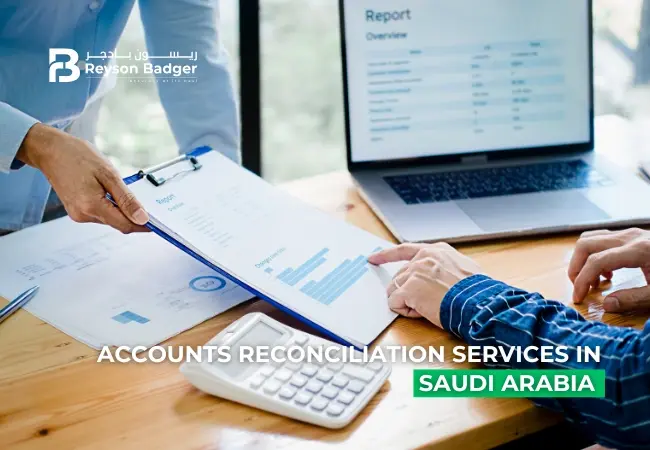
Account reconciliation involves comparing one set of records with another to identify whether they match, and to ensure that records of transactions are accurate and consistent. It is, therefore, an important aspect of managing finances, ensuring that financial transactions are correctly recorded and discrepancies are identified and addressed promptly. In Saudi Arabia, accounts reconciliation plays a crucial role in maintaining accurate books of accounts, ensuring adherence to local regulatory measures, and promoting transparency in all business activities.
As the economic times in the Kingdom keep changing with changed and more aggressive regulatory frameworks, a business should never assume that everything will fall in place without proper management of books of accounts because these books are prone to several mistakes and failings as far as the standards of Saudi financial regulations are concerned. Saudi Arabia's regulatory environment for finance, although an overarching part of ZATCA and SAMA, is always very demanding and strict on compliance with sound accounting standards. Hence, businesses in the Kingdom should align with such requirements to gain credibility over financial issues and not incur penalties, and effective accounts reconciliation is hence a necessity for the success of enterprises in the region.
Benefits of Accounts Reconciliation
Accounts reconciliation is an important business practice that offers numerous benefits to enhance the strength of financial management and overall operational efficiency. Accuracy and reliability of financial records form one of the best advantages of accounts reconciliation. Because internally prepared accounts are compared with externally prepared statements, a business will be able to verify its financial data to ensure that it is correct and thereby minimize errors that lead to incorrect reporting.
Identifies and Compensates for Differences
Accounting reconciliation allows the identification of differences between financial records, whether it is with bank statements or internal ledgers. The organizations, upon recognizing such differences, can immediately address data entry errors, unauthorized transactions, and timing differences. This enhances financial reporting accuracy.
Improves Internal Control and Governance
Regular accounts reconciliation promotes accountability and transparency in financial activities through developing internal control. It gives a base for tracking transactions and ensures that all financial activities are documented, and all financial work done is approved. This better form of governance reduces the chance of fraud and mismanagement.
Aids Compliance with Regulatory Requirements
Most of the regulatory requirements require organizations to keep accurate financial records and ensure consistent reconciliation. The successful implementation of such regulations enables businesses to avoid penalties and other lawsuits while demonstrating commitment toward compliance. This is important in a jurisdiction like Saudi Arabia, which is known for its stringent regulatory analysis.
Aids Proper Financial Decision
The third contribution is to sound financial decision-making with accounts reconciliation. With accurate financial information, the management of the organization is informed in budgeting, investment, or allocation of resources that will be based on true and factual figures. This clarity allows an organization to respond quickly to changing market conditions and fine-tune its financial growth plans.
Types of Accounts Reconciliation
Bank Reconciliation
Reconciling company's accounts with bank statements for consistency.
- Ledger Reconciliation: Matching general ledger and subsidiary ledgers for accuracy.
- Inter-company Reconciliation: Balancing the transactions between the affiliated or subsidiary companies of a group.
- Customer and Vendor Reconciliation: Comparing the company's records with the customer and vendor account statements to strike out any differences.
- Accounts Payable and Receivable Reconciliation: Ensuring that the outstanding payables and receivables coincide with the recorded balance in the financial statements.
Accounts Reconciliation Process in Saudi Arabia
The reconciliation process in Saudi Arabia is systematic and involves several procedures to ensure the proper accuracy and reliability of financial records.
- Pre-Fieldwork or Planning and Preparation: The planning and preparation procedure begins with determining the accounts that need to be reconciled. These would be the bank accounts, accounts receivable, and accounts payable. Subsequently, the organization collects relevant documents or records, which include bank statements, invoices, and receipts, among others, to perform a detailed comparison.
- Fieldwork and Data Collection: Under these, there is fieldwork and data collection. This is where the auditors or finance teams compare the balances found in the company's records with the statements from outside sources. This is done by comparing every transaction that has been recorded in the internal ledgers with similar entries in bank statements or other sources of finance.
- Audit Testing and Evaluation: Then during the testing and evaluation phase of the audit, a mismatch is discovered and addressed. The common problems are missing transactions, missing or unrecorded data, and errors in timing. Further research by the team is made on these mismatches including sending written inquiries to the parties involved, such as sending a question to the bank or to the vendor, regarding the difference in order to validate such disputes.
- Reporting and Recommendations: Finally, the reporting and recommendations phase will record the reconciliation findings. Discrepancies in the process are established. Then, necessary adjustments are made to the financial book. A detailed report then will be derived from summarizing the reconciliation result and giving recommendations for internal control and procedure improvements.
Accounts Reconciliation Requirements in Saudi Arabia
There are a number of regulations and requirements in Saudi Arabia that govern accounts reconciliation to ensure the financial correctness and conformity of the state. This is supplemented by regulations set forth by the Saudi Arabian Monetary Agency which helps guide financial institutions and businesses to maintain records based on accuracy, mainly in terms of bank reconciliations.
Second, there are certain requirements from the Ministry of Commerce and Investment regarding the accounting practices that ought to be exhibited in the reconciliation accounts and accounting practice on regular updates to ascertain total transparency and reliability upon the reporting of financial statements. Regulations on zakat and tax compliance by ZATCA are other examples of appropriate recording of finances to ensure effective tax assessment and eventual payment.
Many entities are now aligned to follow International Financial Reporting Standards that force the accounting practices of the country with strict reconciliation processes to align with international standards. Taken collectively, these impose commitment to capital, improvement in governance, and support for compliance in Saudi Arabia and worldwide.
What Are the Best Practices for Accounts Reconciliation?
- Regular Reconciliation Schedules: Adhering to regular schedules helps catch errors early, ensuring that financial records are up-to-date and accurate.
- Automated Reconciliation Tools: Automation minimizes human error, speeds up the process, and ensures more reliable matching of transactions.
- Segregation of Duties: Dividing tasks prevents any one person from controlling all aspects of financial transactions, reducing the risk of fraud and errors.
- Documentation and Record-keeping: Organized records create a clear audit trail, making it easier to verify transactions and resolve discrepancies.
- Continuous Training and Improvement: Regular training keeps teams updated on the latest best practices and technology, enhancing the effectiveness and efficiency of the process.
What Are the Common Challenges in Accounts Reconciliation?
- Errors in data lead to discrepancies that complicate the reconciliation process and delay accurate reporting.
- Without effective controls, it's easier for mistakes or fraudulent activities to go unnoticed, resulting in unreliable financial statements.
- Manually reconciling accounts is time-consuming and prone to errors, especially for organizations with high transaction volumes.
- Without proper training, staff may struggle with the reconciliation process, leading to mistakes and inefficiencies in financial management.
Conclusion
Account reconciliation helps ensure error-free financial records, compliance with all regulatory requirements and the safeguarding of a company’s financial health. In Saudi Arabia, this means adherence to standards set by entities such as SAMA, the Ministry of Commerce and Investment, and ZATCA.
Financial consulting firms like Reyson Badger, with its experience, deliver comprehensive accounts reconciliation services that concentrate on the unique regulatory environment of Saudi Arabia. It can help business organizations streamline the reconciliation process while reducing risks and ensuring compliance with International Financial Reporting Standards, or IFRS.
Ensure your financial records are always accurate and compliant with local and international standards. Let Reyson Badger handle the reconciliation of your accounts with precision and expertise. Contact us today for the best reconciliation services that keep your business running smoothly and stress-free.
Latest Blogs

Accounts Outsourcing Services in Dubai: What Every Business Owner Should Know
Accounts Outsourcing Services in Dubai cover essential finance functions through a structured and professional workflow, compliant, and financially organized.
READ MORE →
VAT Impact on Company Profit in UAE: Key Factors Businesses Must Understand
Explore how VAT impacts company profit in the UAE, including compliance costs, pricing strategies, and the role of professional VAT services for businesses.
READ MORE →
Understanding VAT Refund Rules for Tourists in UAE Under FTA Guidelines
This guide explains VAT refund rules for tourists in the UAE, including eligibility, qualifying purchases, refund process, and key FTA guidelines to claim VAT refund in UAE.
READ MORE →
Why AML Checks Are More Important Than Ever in 2026?
Learn why AML compliance is vital in 2026. Avoid fines, protect your business, and meet new regulatory standards with strong AML checks.
READ MORE →
VAT Registration Threshold in UAE: Requirements, Calculation, and Compliance
READ MORE →
Amendment of the United Arab Emirates (UAE) VAT Decree-Law from 1st January 2026
UAE VAT Decree-Law amendments effective 2026 explained, including reverse charge updates, refund time limits, and enhanced FTA authority.
READ MORE →
Accounting Services in Dubai: A Practical Guide for Growing Companies
Accounting services in UAE, businesses gain clarity, confidence, and control over their finances allowing them to focus on what matters most: building and scaling their business in the UAE's competitive market.
READ MORE →
Corporate Tax Advance Pricing Agreements in the UAE
Advance Pricing Agreements (APAs) in the UAE help businesses obtain certainty on transfer pricing methods under the Corporate Tax regime. Learn how APAs work, eligibility criteria, benefits, and compliance requirements set by the UAE Federal Tax Authority
READ MORE →
UAE FTA Moves to Free Digital Tax Certificates: What It Means for Businesses?
The UAE FTA now offers free digital tax registration certificates with QR codes, eliminating paper fees and simplifying compliance for businesses.
READ MORE →
UAE FTA Removes Fees for Paper Tax Certificates, Moves to Free Digital Certificates
UAE Federal Tax Authority removes fees for paper tax certificates and introduces free digital certificates with QR codes from January 2026.
READ MORE →