VAT Impact on Company Profit in UAE: Key Factors Businesses Must Understand
19-Jan-2026
VAT Registration in Saudi Arabia
VAT Registration in Saudi Arabia
VAT Registration in Saudi Arabia is an important step for businesses to follow the tax rules correctly. Value Added Tax (VAT) is a type of tax that Saudi Arabia started using in 2018. It's a bit like a sales tax you might have seen in other places. This tax applies to most things you buy, like when you go shopping for clothes, food, or even when you pay for services like getting your car fixed or going to the hair salon.
If you're someone who has a business or is thinking of starting one, VAT is something you need to know about. Registering for VAT means telling the government that you're now part of the system that collects this tax. This is important because there is a legal requirement for this. Not registering can lead to problems later on, especially when it comes to compliance matters such as filing returns or claiming vat refund in saudi arabia.
Many people have concerns about how it works, when they need to register, and what they need to do to stay on the right side of the law. This guide aims to help answer those questions regarding VAT registration in Saudi Arabia easier for everyone.
Types of VAT Registration
There are two main types of VAT registration services Mandatory and Voluntary . Mandatory means you must do it by law, while voluntary means you can choose to do it if you want to. Whether it's mandatory or voluntary for you depends on how much your business makes in sales. If your sales reach a certain amount, you have to register.
There are also some things that VAT doesn't apply to. These are called exemptions. For example, some basic food items, medical services, and certain financial services might not have VAT added to their prices. If you are curious to know more about it let's get into details.
Mandatory VAT Registration
The Zakat, Tax and Customs Authority (ZATCA ), the Saudi tax authority, outlines the criteria for mandatory registration. Here's a breakdown:
Threshold-Based Registration: This means that if your business crosses a certain limit of taxable supplies within a specific period, you must register for VAT. The current threshold is SAR 375,000 (approximately $100,000 USD) for the total value of taxable supplies in the past 12 months or what you expect to make in the next 12 months. Once you cross this threshold, you have 30 days from the end of that month to register for VAT.
Mandatory Registration for Specific Sectors : There are also specific businesses that must register for VAT regardless of whether they meet the threshold or not. These include:
- Suppliers of goods and services specified by GAZT: This means businesses that provide certain types of goods or services identified by the tax authority.
- Importers of goods: Importers’ imported goods count towards the calculation of taxable supplies for resident businesses, so a resident importer must register if its total taxable supplies and imports exceed AED 375,000; non-resident suppliers who are obliged to account for VAT in the UAE may also need to register under the FTA’s non-resident rules.
- Businesses involved in onward supplies through a reverse charge mechanism: This applies when you receive goods or services from another business but are responsible for paying the VAT instead of the supplier.
It's important to keep track of your taxable supplies and understand whether you fall under the mandatory registration criteria. If you do, it's your responsibility to register for VAT within the specified timeframe. Not doing so can lead to penalties imposed by GAZT.
Penalties for not registering when mandatory:
Failing to register for VAT when mandatory can lead to penalties imposed by GAZT. These penalties can be significant, so it's important to ensure you comply with the regulations.
Voluntary VAT Registration
Not every business in Saudi Arabia has to register for VAT, there's an option called voluntary registration that can be helpful in some situations. Here's why you might think about choosing voluntary registration:
Recovering Input Tax: If your business spends a lot on purchases that have VAT included (called input tax), VAT Registration in KSA lets you get that VAT money back from the tax authority (GAZT). This can improve how much money you have available.
Competing Better: In some industries, being registered for VAT can make your business look more trustworthy and competitive.
It's important to know that choosing voluntary registration means you also have to follow all the rules for VAT. This includes things like regularly reporting your sales and purchases to the tax authority and paying any VAT you owe. Before deciding on voluntary registration, think about both the good things and the challenges it might bring to your business.
Benefits of Voluntary Registration:
- If your business spends a lot on purchases that have VAT included (called input tax), VAT registration allows you to claim that VAT back from GAZT. This can improve your cash flow.
- In some industries, being registered for VAT can make your business look more trustworthy and competitive. This is because it shows you're a larger, more established business.
Things to Consider Before Voluntary Registration:
- Compliance Requirements: Choosing voluntary registration means you also have to follow all the rules for VAT. This includes things like regularly reporting your sales and purchases to GAZT and paying any VAT you owe.
- Administrative Burden: VAT compliance can add an administrative burden to your business. Make sure you have the resources and capabilities to handle the additional reporting requirements.
Exemption from VAT Registration
In Saudi Arabia, most businesses that sell goods and services have to pay Value Added Tax (VAT). However, certain things don't have VAT added to their prices. Here are some examples:
- Basic Necessities: This includes things like most fresh foods, things straight from farms without processing, and public transportation like buses and trains.
- Financial Services: This refers to things like loans from banks, insurance services, and renting land that doesn't have any buildings on it.
- Educational Services: Both public schools and private schools don't have VAT added to the money you pay for education.
These exemptions are there to make sure that things like food, education, and some financial services stay affordable for people.
Required Documents for VAT Registration
These documents are required for VAT registration in Saudi Arabia:
- Business name, including ID information or the name of the individual concerned
- Addresses, including email addresses and other contact details
- GAZT's electronic identification number, if available
- CR (Commercial Registration) number
- Please specify the date of VAT registration or a requested alternative date
- An annual estimate of the value of taxable products
- Copy of the company's Memorandum of Association.
- Copy of the owner's national identity card or passport.
- Copy of the company's registration certificate from the country of origin and a copy of the appointment of a tax representative in Saudi Arabia (if needed).
It's important to ensure you have all the necessary documents before starting the VAT registration process.
VAT Registration Process in Saudi Arabia
Here is a detailed explanation of the VAT registration process in Saudi Arabia:
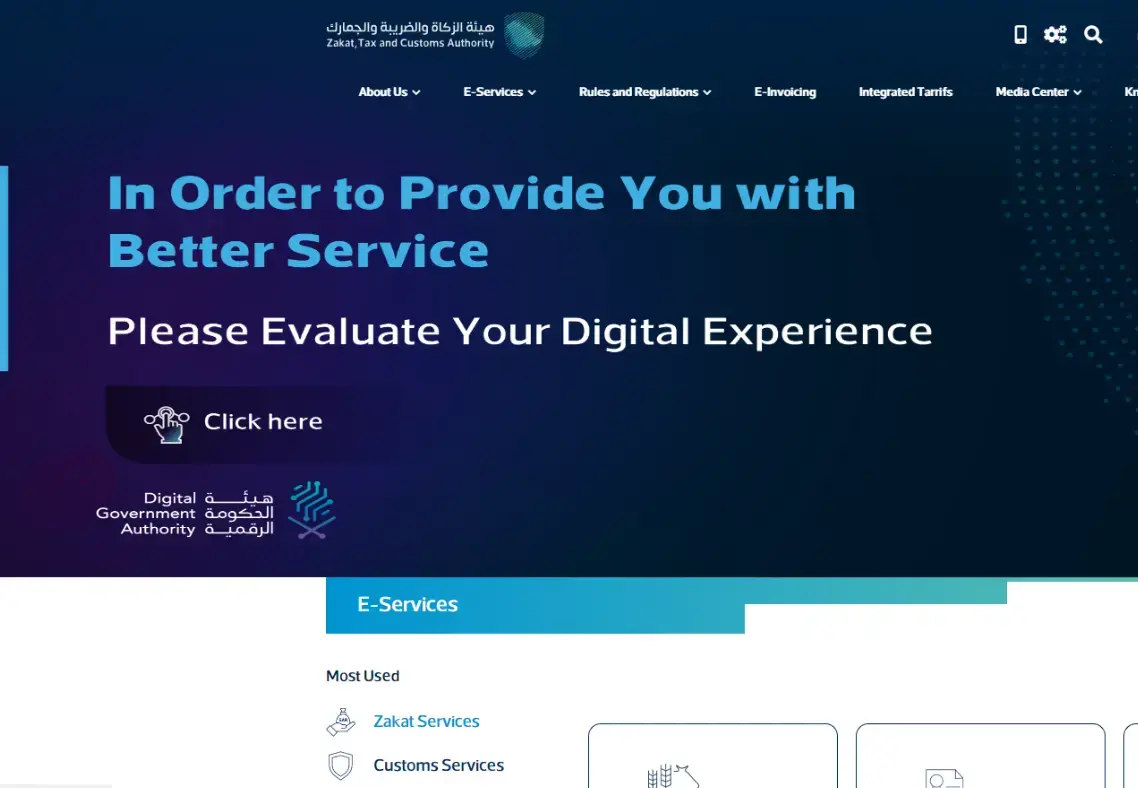
Access the ZATCA Website
First, visit the ZATCA website at zatca.gov.sa . This is the official website for the General Authority of Zakat and Tax (GAZT) in Saudi Arabia.
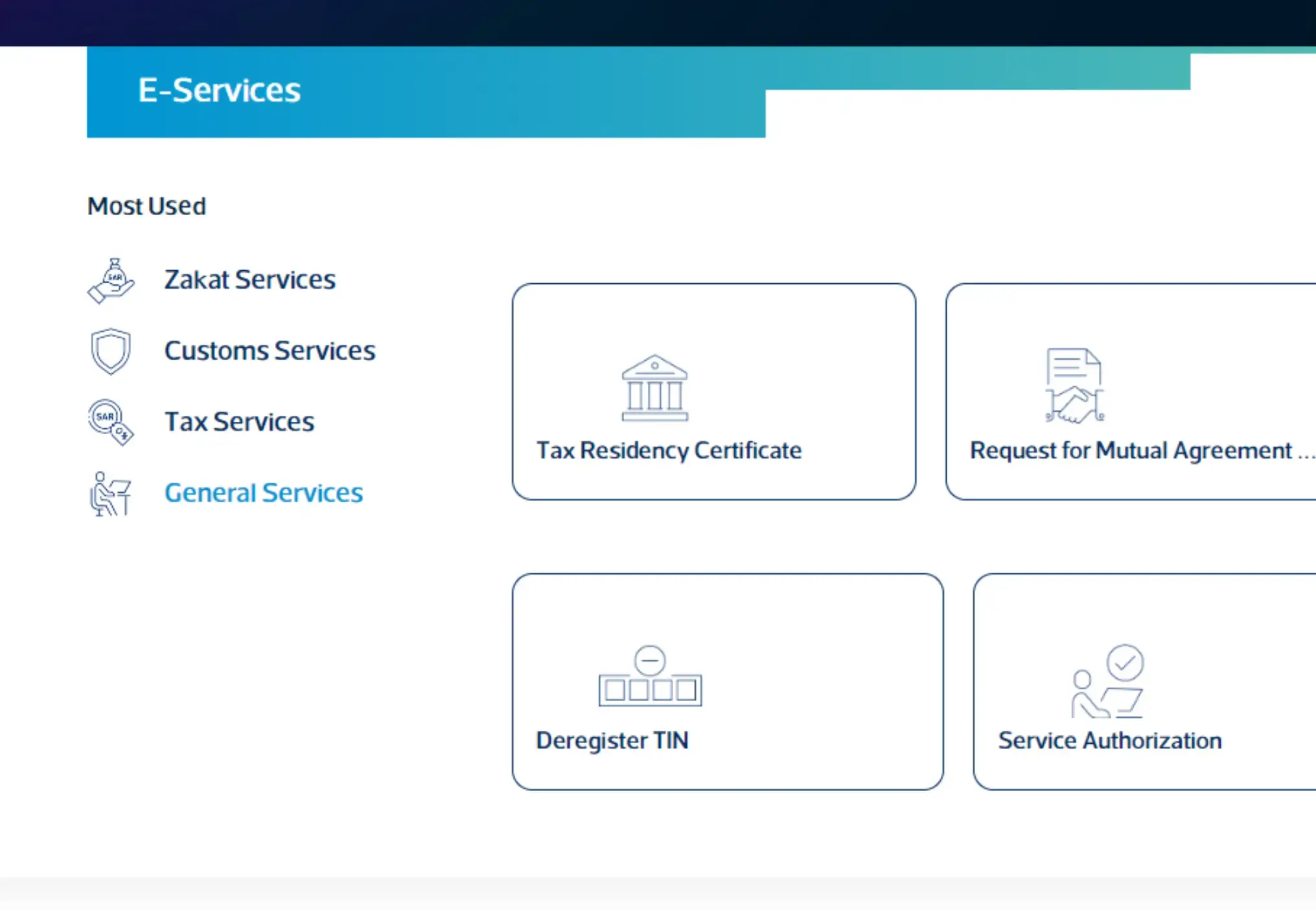
Navigate to General Services
On the ZATCA website, look for the "General Services" tab. This tab is usually located in the main menu or navigation bar of the website.
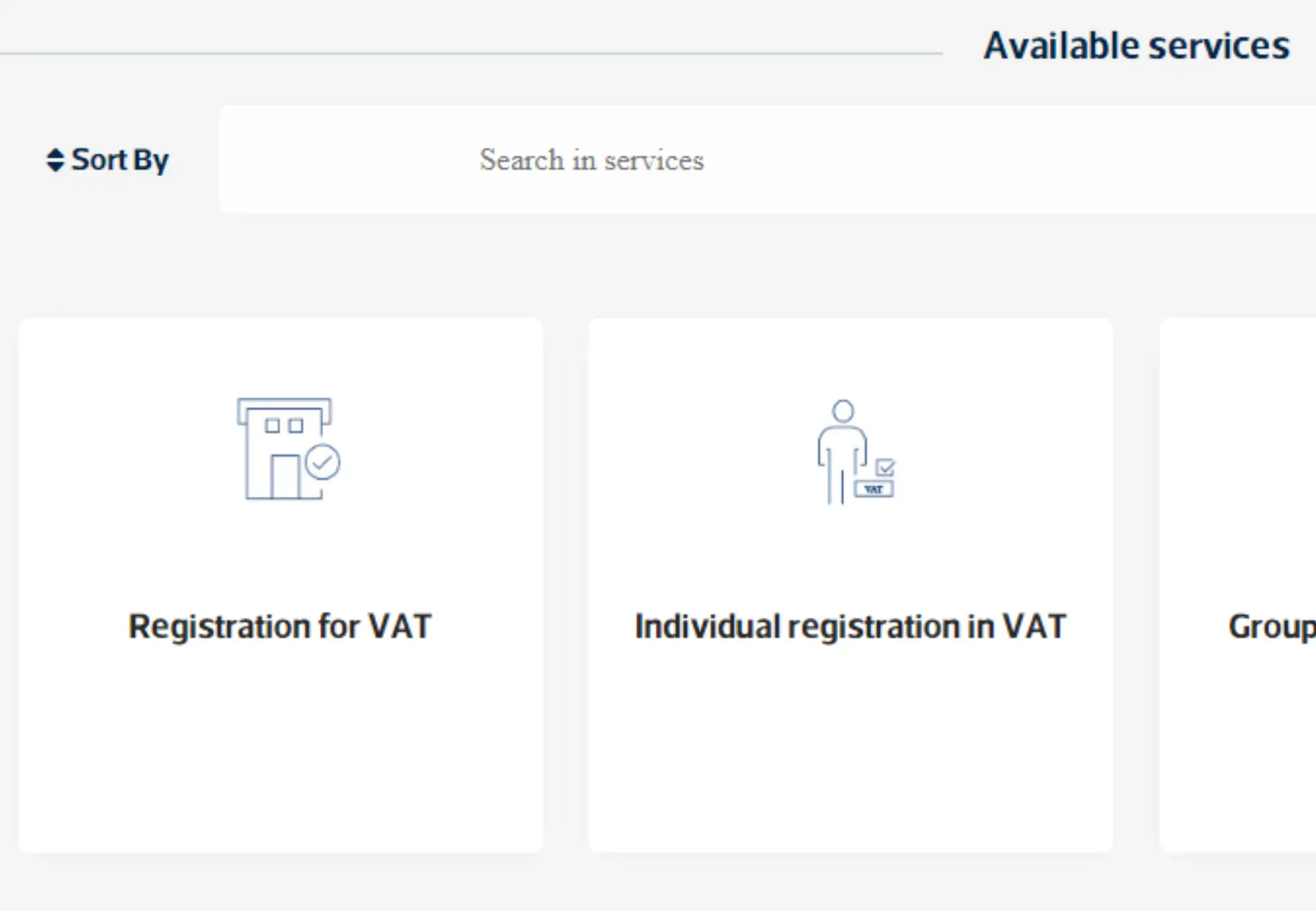
Click on Registration for VAT
Once you're on the General Services page, find and click on the "Registration for VAT" tab. This tab will take you to the VAT registration section of the website.
Log in to the ZATCA Portal
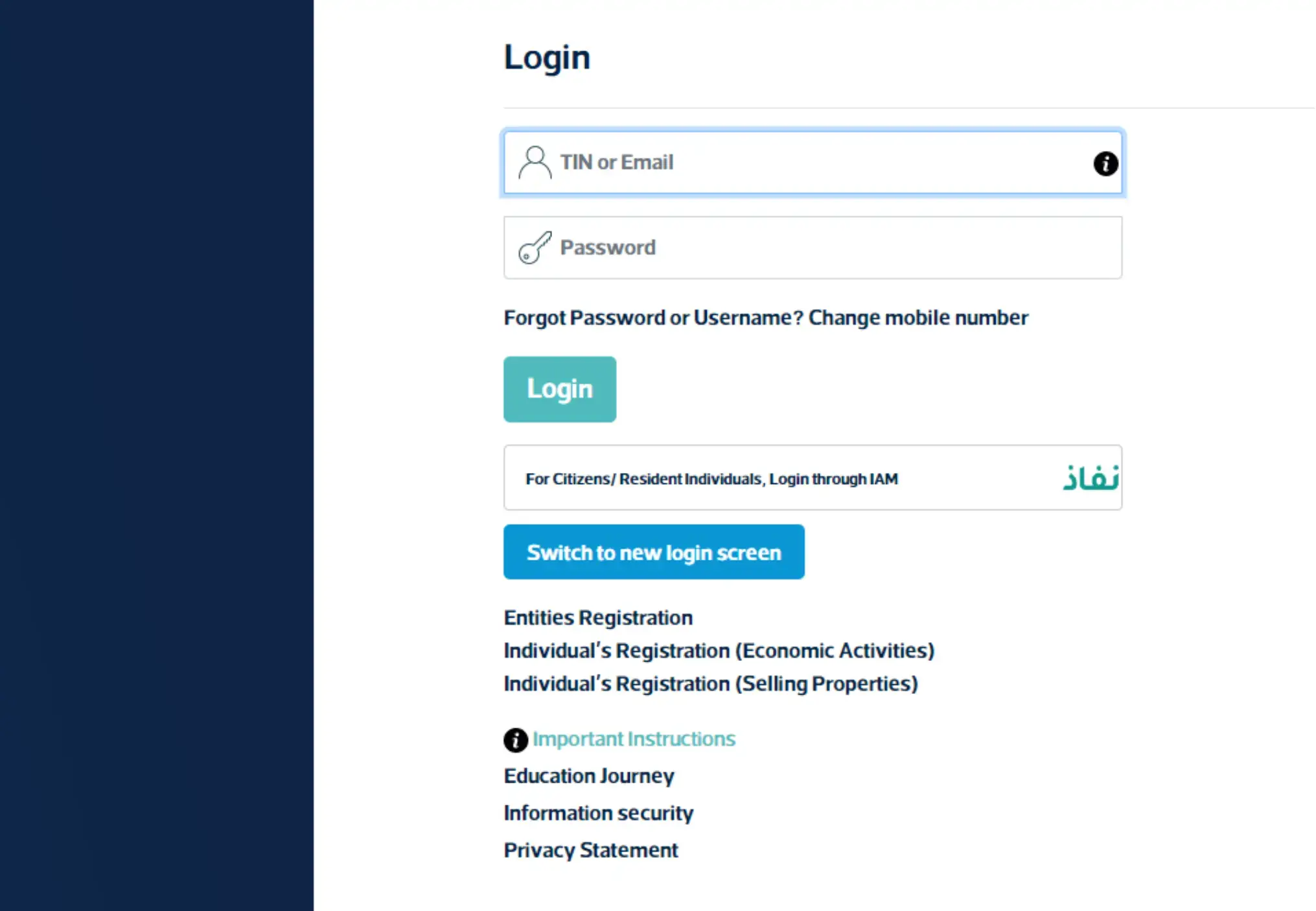
Login to the ZATCA Portal using your ZATCA TIN/E-Mail and Password. If you are a Citizen/a Resident you can login through the IAM Portal
Fill Out the Registration Form
After clicking on the "Registration for VAT" tab, you'll be directed to a registration form. Fill out this form completely and accurately. The form will ask for details such as your business name, contact information, tax identification number, and other relevant details.
Submit the Form
Once you've filled out the registration form, review it carefully to ensure all information is correct. After verification, submit the form through the online submission portal provided on the website. Be sure to follow any additional instructions or guidelines provided during the submission process.
Receive Notification and VAT Certificate
After submitting the registration form, you'll receive a confirmation or notification from the GAZT. This notification may be sent via email or through the online portal. It will confirm that your registration request has been received and is being processed.
Once your VAT registration is approved, you will receive a VAT certificate. This certificate serves as official proof that your business is registered for VAT in Saudi Arabia.
It's important to note that the VAT registration process may vary slightly depending on updates or changes made by the GAZT. Therefore, it's recommended to refer to the official ZATCA website for the most current and accurate information regarding VAT Registration in Saudi Arabia .
How Can Reyson Badger Help?
At Reyson Badger , we're here to make dealing with VAT registration in Saudi Arabia easier for you. Our team of tax experts can help you with several important things related to VAT. We will figure out if you need to sign up for VAT Registration in KSA. This depends on how much your business sells and what kind of business you have. we will explain the difference between needing to register and choosing to register. If you do need to register, we will guide you through the whole process. we will help you gather the right documents, fill out the forms, and send everything to the tax authorities on time. Once you're registered, we will take care of preparing and submitting your VAT returns accurately and on time. we will make sure you follow all the rules and regulations related to VAT to avoid any penalties or problems. No matter if you have a small business or a big one, we're here to answer all your questions and provide the assistance you need with VAT registration in Saudi Arabia.
- VAT Registration Services in Dammam
- VAT Registration Services in Riyadh
- VAT Registration Services in Jeddah
Frequently Asked Questions (FAQ)
1. What is the current VAT registration threshold in Saudi Arabia?
The threshold is set by ZATCA and may change, so check their official site for the latest. Generally, mandatory registration applies when your annual taxable supplies exceed a specific limit.
2. Can a foreign company with no physical presence in Saudi Arabia register for VAT?
Yes. Foreign businesses can register for VAT in Saudi Arabia, often through a local tax representative.
3. How long does it take to get VAT approved once I apply?
If all documents are complete and accurate, ZATCA typically processes a VAT application within a few weeks.
4. Do I need to register voluntarily if my turnover is below the threshold?
Not necessarily, but voluntary registration can be beneficial if you want to reclaim input VAT and build credibility.
5. What are the consequences of not registering for VAT when required?
You could face fines, back-dated VAT liabilities, and interest on unpaid VAT. It’s risky to delay.
6. How often do I have to file VAT returns?
Generally, VAT returns are filed quarterly or monthly, depending on your business size and ZATCA’s rules.
7. Do I need to issue special tax invoices once registered?
Yes. Invoices must include the VAT number, the VAT rate, and VAT amount, following ZATCA guidelines.
8. How long should I retain VAT-related records?
You should keep VAT invoices, returns, and supporting documents for the duration specified by ZATCA (usually several years), to support audits.
VAT
Saudi Arabia
- Tax Services in Saudi Arabia
- VAT Return Filing Service in Saudi Arabia
- VAT Submission in Saudi Arabia
- Economic Substance Regulations Service in Saudi Arabia
- VAT Registration in Saudi Arabia
- AML Services in KSA
- VAT Refund in Saudi Arabia
- Accounting Services in Saudi Arabia
- Bookkeeping Services in Saudi Arabia
- Business Valuation Services in Saudi Arabia
- Withholding Tax in Saudi Arabia
- Zakat in Saudi Arabia
- Backlog Accounting Services in Saudi Arabia
- Non Resident VAT Registration in KSA
- Accounts Reconciliation Services in Saudi Arabia
- VAT Consultancy in Saudi Arabia
- Due Diligence Services in Saudi Arabia
- Feasibility Study in Saudi Arabia
- Market Research services in Saudi Arabia
- Mergers and acquisitions in Saudi Arabia
- Tax Compliance Service in Saudi Arabia
- Tax Advisory Services in Saudi Arabia
- Tax Advisory Services in Riyadh
Abu Dhabi
- Audit Services in Abu Dhabi
- Corporate Tax Services in Abu Dhabi
- Corporate Tax Registration in Abu Dhabi
- Corporate Tax Return in Abu Dhabi
- Corporate Tax Accounting in Abu Dhabi
- Corporate Tax Audit In Abu Dhabi
- Accounting Services in Abu Dhabi
- Backlog Accounting Services in Abu Dhabi
- VAT Services in Abu Dhabi
- Accounts Reconciliation Services in Abu Dhabi
- VAT Refund Services in Abu Dhabi
- Bookkeeping Services in Abu Dhabi
- Anti Money Laundering Services in Abu Dhabi
- VAT Registration Services in Abu Dhabi
- Business Valuation Services in Abu Dhabi
- Due Diligence Service in Abu Dhabi
- VAT Return Filing Services in Abu Dhabi
- Mergers and Acquisitions Services in Abu Dhabi
- Market Research Services in Abu Dhabi
- Feasibility Study Services in Abu Dhabi
Sharjah
- Corporate Tax Services in Sharjah
- Corporate Tax Registration in Sharjah
- Corporate Tax Return in Sharjah
- Corporate Tax in Sharjah Free Zone
- Corporate Tax Audit in Sharjah
- VAT Services in Sharjah
- VAT Return Filing Services in Sharjah
- VAT Registration Services in Sharjah
- Accounting Services in Sharjah
- Accounts Reconciliation Services in Sharjah
- Anti-Money Laundering in Sharjah
- Bookkeeping Services in Sharjah
- Backlog Accounting Sharjah
Latest Blogs
22
Jan
Accounts Outsourcing Services in Dubai: What Every Business Owner Should Know
Accounts Outsourcing Services in Dubai cover essential finance functions through a structured and professional workflow, compliant, and financially organized.
READ MORE →
19
Jan
VAT Impact on Company Profit in UAE: Key Factors Businesses Must Understand
Explore how VAT impacts company profit in the UAE, including compliance costs, pricing strategies, and the role of professional VAT services for businesses.
READ MORE →
19
Jan
Understanding VAT Refund Rules for Tourists in UAE Under FTA Guidelines
This guide explains VAT refund rules for tourists in the UAE, including eligibility, qualifying purchases, refund process, and key FTA guidelines to claim VAT refund in UAE.
READ MORE →
22
Jan
Why AML Checks Are More Important Than Ever in 2026?
Learn why AML compliance is vital in 2026. Avoid fines, protect your business, and meet new regulatory standards with strong AML checks.
READ MORE →
23
Jan
VAT Registration Threshold in UAE: Requirements, Calculation, and Compliance
READ MORE →
22
Jan
Amendment of the United Arab Emirates (UAE) VAT Decree-Law from 1st January 2026
UAE VAT Decree-Law amendments effective 2026 explained, including reverse charge updates, refund time limits, and enhanced FTA authority.
READ MORE →
19
Jan
Accounting Services in Dubai: A Practical Guide for Growing Companies
Accounting services in UAE, businesses gain clarity, confidence, and control over their finances allowing them to focus on what matters most: building and scaling their business in the UAE's competitive market.
READ MORE →
23
Jan
Corporate Tax Advance Pricing Agreements in the UAE
Advance Pricing Agreements (APAs) in the UAE help businesses obtain certainty on transfer pricing methods under the Corporate Tax regime. Learn how APAs work, eligibility criteria, benefits, and compliance requirements set by the UAE Federal Tax Authority
READ MORE →
23
Jan
UAE FTA Moves to Free Digital Tax Certificates: What It Means for Businesses?
The UAE FTA now offers free digital tax registration certificates with QR codes, eliminating paper fees and simplifying compliance for businesses.
READ MORE →
21
Jan
UAE FTA Removes Fees for Paper Tax Certificates, Moves to Free Digital Certificates
UAE Federal Tax Authority removes fees for paper tax certificates and introduces free digital certificates with QR codes from January 2026.
READ MORE →