Accounting Services in Dubai: A Practical Guide for Growing Companies
19-Jan-2026
AML Regulation Services
AML Regulation Services
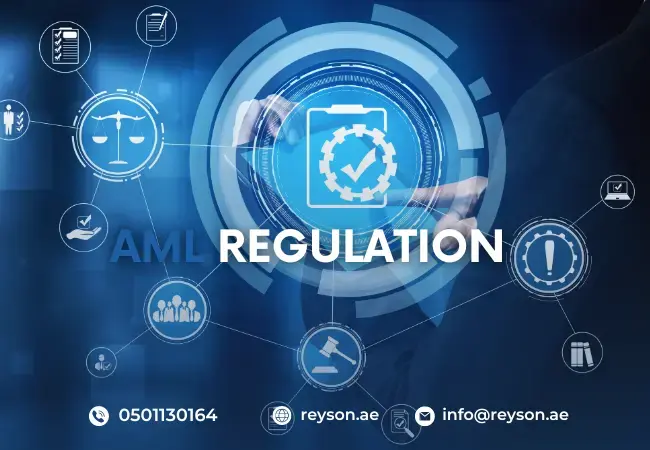
What is AML Regulation?
AML (Anti-Money Laundering) Regulation Services in the UAE consist of laws and guidelines designed to prevent illicit funds from entering the financial system.
Why it matters for your business:
- Prevent financial crimes such as fraud, corruption, and terrorism financing.
- Ensure compliance with UAE laws and regulatory authorities (CBUAE, SCA, MoE, VARA).
- Implement KYC/CDD procedures to verify clients and monitor transactions.
- Maintain detailed records and report any suspicious activities to the authorities.
What AML Regulation Services offer UAE businesses?
AML Regulation Services in UAE help businesses:
- Understand and comply with UAE-specific AML rules and regulations.
- Build a robust compliance framework tailored to their business.
- Implement KYC/CDD procedures, conduct risk assessments, and provide employee training.
- Accurately report suspicious transactions to the Financial Intelligence Unit (FIU).
Do all UAE Businesses need to be AML Compliant?
The Anti-Money Laundering (AML) Regulations in the UAE, primarily based on Federal Decree-Law No. (20) of 2018 and its Implementing Regulation (Cabinet Decision No. 10 of 2019) apply to a broad range of entities to safeguard the financial system. These key categories include:
| Category of Business | Primary Supervisory Authority/Regulator(s) | Examples of Businesses/Activities |
|---|---|---|
| Financial Institutions (FIs) | Central Bank of the UAE (CBUAE) | Banks, Money Exchange Houses, Finance Companies, Insurance Companies & Brokers, Securities Brokers, Listed Companies |
| Designated Non-Financial Businesses and Professions (DNFBPs) | Ministry of Economy (MoE) and other relevant authorities | Real estate agents, Dealers in precious metals, Trust & Corporate Service Providers, Auditors, Legal Professionals |
| Virtual Asset Service Providers (VASPs) | Virtual Assets Regulatory Authority (VARA) in Dubai, and other relevant authorities | Businesses providing services related to virtual assets. |
What are the core AML compliance requirements for UAE businesses?
- Legal Framework Compliance: Follow Federal Decree-Law No. 20 of 2018, Cabinet Decision No. 10 of 2019, and sector-specific guidance (SCA, CBUAE).
- Internal Policies & Procedures: Establish comprehensive controls to identify, assess, and mitigate money laundering/terrorist financing risks.
- Customer Due Diligence (CDD) & KYC: Verify customer identities, beneficial owners, and the purpose of the business relationship; apply Enhanced Due Diligence for high-risk clients.
- Risk-Based Approach (RBA): Regularly assess risks from operations, products, services, customers, and geographic exposure.
- AML/CFT Compliance Officer: Designate a qualified officer to oversee compliance and liaise with regulatory authorities.
- Employee Training: Conduct regular AML/CFT training for all relevant staff.
- Suspicious Transaction Reporting (STR/SAR): Submit timely reports to the FIU via the GoAML portal.
- Record-Keeping: Maintain all records for a minimum of five years.
- Sanctions Compliance: Screen against national and international sanctions lists.
- Internal Controls & Monitoring: Use technology to monitor transactions and manage AML/CFT risks.
Which are the Primary AML Regulatory Bodies for UAE businesses?
- Securities and Commodities Authority (SCA) Board of Directors Decision No. 21 of 2019: This decision outlines specific AML procedures for entities regulated by the SCA.
- Central Bank of the UAE (CBUAE): The CBUAE also issues guidelines and regulations related to AML/CFT for financial institutions.
- The Financial Intelligence Unit (FIU) is the major national institution in charge of receiving, evaluating, and disseminating financial information related to suspected money laundering, terrorism financing, and other illegal activities.
How do KYC/AML Providers help UAE Companies Meet Compliance?
Specialized providers assist businesses to:
- Identify customers by verifying IDs, backgrounds, and beneficial owners.
- Monitor transactions to detect unusual or suspicious activity.
- Conduct sanctions screening against global and UAE-specific blacklists.
- Perform risk assessments and suggest mitigation measures.
- Automate compliance through technology-enabled checks and monitoring.
- Maintain records and documentation for audits.
- Stay updated with evolving UAE and international AML regulations.
What should you look for in an AML Regulation Service Provider?
- Intricate and current understanding of the UAE's AML framework: Including Federal Decree-Law No. (20) of 2018, its implementing regulations, and sector-specific guidance from the Central Bank, SCA, and the Ministry of Economy.
- Strong track record of successfully assisting businesses like yours right here in the UAE, indicating local market acumen and experience.
- Comprehensive and tailored solutions: Offering services such as risk assessments, bespoke policy development, robust CDD/EDD frameworks, transaction monitoring solutions,FDUE STR guidance, and engaging employee training.
- Understanding of international AML standards: To ensure preparedness for the global stage.
- Leveraging cutting-edge technology: To streamline KYC, screening, and transaction monitoring processes.
- Clear communication and actionable reporting: Ensuring you understand the process and results.
- Ongoing support: To adapt to evolving regulations.
Why Choose Reyson Badger for AML Regulation Services?
Reyson Badger is an FTA certified firm, authorised to provide comprehensive tax and compliance services in the UAE, ensuring our clients meet all regulatory obligations. We offer:
- Deep awareness of UAE rules, including all major statutes and directives.
- Proven success in the local market: Helping businesses like yours comply effectively.
- Tailored, comprehensive solutions: From risk assessment to training, designed for your needs.
- Future-focused approach: Keeping you ahead of evolving global standards.
- Technology-enabled efficiency: Streamlining your compliance processes.
- Clear, actionable advice: Making complex regulations understandable.
- Dedicated partnership: We're invested in your long-term compliance success.
Ensure robust AML compliance for your UAE business. Contact Reyson Badger today for a Free consultation.
To stay updated, you can also read our detailed blog on Understanding the Latest UAE AML Regulations, which highlights the key compliance requirements businesses must follow
FAQs
1.Does the JFSC AML Handbook have any Implications for Businesses Operating in or with Jersey from the UAE?
If your UAE-based business operates in or has dealings with Jersey (a self-governing island in the Channel Islands, known as a financial center) then yes, the JFSC (Jersey Financial Services Commission) AML Handbook has implications for you.
Think of it this way: Jersey has its own set of rules to prevent money laundering, just like the UAE. If you're doing business there, you need to play by their rules, too.
Here's why it matters:
- Their Rules, Your Responsibility: If you have clients, subsidiaries, or any financial activities in Jersey, you'll need to comply with the JFSC AML Handbook.
- Due Diligence is Key: You'll likely need to conduct due diligence on your Jersey-related activities and potentially your Jersey-based customers, following their guidelines.
- Reporting Obligations: If you spot anything suspicious related to your Jersey operations, you'll need to understand their reporting requirements.
In short, if Jersey is part of your business landscape, understanding and adhering to the JFSC AML Handbook isn't optional – it's a must to operate smoothly and legally.
2.Why International AML Standards Matter to Your UAE Business?
Even while legislation like OFAC and FCA may appear distant, the worldwide fight against money laundering has an impact right here in the UAE. Think of it this way:
As a responsible global player, the UAE follows international best practices set by bodies like FATF. These are the same standards that influence regulations in places like the US and the UK.
Here's why this matters to you:
Global Trust: International partners and banks expect UAE businesses to have strong AML controls, making it easier to work together.
Smooth Transactions: Aligning with global standards helps ensure smoother international payments and access to global markets.
Protecting Our Reputation: By following these norms, we collectively maintain the UAE's standing as a trusted place to do business.
Staying Ahead: As global rules evolve, the UAE adapts, meaning your business needs to be aware of these international trends to stay compliant.
3.How does the UAE anti-money laundering law 2021 impact businesses?
The UAE anti-money laundering law 2021 represents a significant step in strengthening the country's AML framework. This law introduces stricter requirements around beneficial ownership transparency, enhanced due diligence for high-risk customers, and more stringent penalties for non-compliance. Understanding the nuances of this law is crucial for all businesses operating in the UAE to ensure they are meeting the latest legal obligations.
4.What are the AML/CFT Regulations in the UAE?
To get the most accurate and up-to-date information on AML/CFT Regulations in the UAE, you should directly check the official website of the Central Bank of the UAE (CBUAE).
You can find comprehensive details, including the core laws, implementing regulations, and various guidance notes for licensed financial institutions and providers of AML services, at their website. Look for sections related to "AML/CFT Supervision" or the "CBUAE Rulebook" on their site for detailed information.
5.What steps may firms take to achieve effective AML compliance in the UAE?
- Conduct thorough risk assessments.
- Implement strong CDD/EDD processes.
- Develop comprehensive internal AML policies and procedures.
- Appoint a competent and well-resourced AML Compliance Officer.
- Regularly train all relevant staff.
- Utilise technology for screening and transaction monitoring.
- Stay updated with the latest regulatory changes and guidance from CBUAE and other supervisory bodies.
- Register and diligently report on the goAML portal.
Accounting
Accounting Services for Industries
- Engine Manufacturing
- Pharmaceutical Manufacturing Industry
- Accounting Services For Bread Manufacturing Units in Dubai
- Manufacturing Sector in UAE
- Accounting For Tobacco And Cigarette Manufacturing Industry in Dubai
- Iron and Steel Casting Industry
- Accounting for Marine Companies in UAE
- Accounting Services for Insurance Companies in UAE
- Accounting Services for Construction Companies in UAE
- Accounting Services for Event Management in UAE
- Accounting Services for Oil and Gas
- Accounting Services for Real Estate in UAE
- Accounting Services for Restaurants in UAE
- Accounting services for E-Commerce
- Accounting Services for Technology in UAE
Business Valuation Services in Dubai, UAE
- Due Diligence Services in Dubai, UAE
- Feasibility Study Services in Dubai, UAE
- Market Research Companies in Dubai
- Mergers and Acquisitions in Dubai
- Business Valuation Services in Ajman
- Business Valuation Services in Ras Al Khaimah
- Business Valuation Services in Fujairah
- Business Valuation Services in Umm Al Quwain
- Business Valuation Services in Riyadh
- Feasibility Study Services in Ras Al Khaimah
- Mergers and acquisitions in Ajman
- Business Valuation Services in Sharjah






Latest Blogs

22
Jan
Accounts Outsourcing Services in Dubai: What Every Business Owner Should Know
Accounts Outsourcing Services in Dubai cover essential finance functions through a structured and professional workflow, compliant, and financially organized.
READ MORE →
19
Jan
VAT Impact on Company Profit in UAE: Key Factors Businesses Must Understand
Explore how VAT impacts company profit in the UAE, including compliance costs, pricing strategies, and the role of professional VAT services for businesses.
READ MORE →
19
Jan
Understanding VAT Refund Rules for Tourists in UAE Under FTA Guidelines
This guide explains VAT refund rules for tourists in the UAE, including eligibility, qualifying purchases, refund process, and key FTA guidelines to claim VAT refund in UAE.
READ MORE →
22
Jan
Why AML Checks Are More Important Than Ever in 2026?
Learn why AML compliance is vital in 2026. Avoid fines, protect your business, and meet new regulatory standards with strong AML checks.
READ MORE →
23
Jan
VAT Registration Threshold in UAE: Requirements, Calculation, and Compliance
READ MORE →
22
Jan
Amendment of the United Arab Emirates (UAE) VAT Decree-Law from 1st January 2026
UAE VAT Decree-Law amendments effective 2026 explained, including reverse charge updates, refund time limits, and enhanced FTA authority.
READ MORE →
19
Jan
Accounting Services in Dubai: A Practical Guide for Growing Companies
Accounting services in UAE, businesses gain clarity, confidence, and control over their finances allowing them to focus on what matters most: building and scaling their business in the UAE's competitive market.
READ MORE →
23
Jan
Corporate Tax Advance Pricing Agreements in the UAE
Advance Pricing Agreements (APAs) in the UAE help businesses obtain certainty on transfer pricing methods under the Corporate Tax regime. Learn how APAs work, eligibility criteria, benefits, and compliance requirements set by the UAE Federal Tax Authority
READ MORE →
23
Jan
UAE FTA Moves to Free Digital Tax Certificates: What It Means for Businesses?
The UAE FTA now offers free digital tax registration certificates with QR codes, eliminating paper fees and simplifying compliance for businesses.
READ MORE →
21
Jan
UAE FTA Removes Fees for Paper Tax Certificates, Moves to Free Digital Certificates
UAE Federal Tax Authority removes fees for paper tax certificates and introduces free digital certificates with QR codes from January 2026.
READ MORE →