VAT Impact on Company Profit in UAE: Key Factors Businesses Must Understand
19-Jan-2026
Simple, Accurate & Fully Compliant VAT Registration in the UAE
VAT Registration in Dubai
VAT Registration in Dubai
Value Added Tax (VAT) is a tax system that businesses in the UAE must follow to meet tax requirements. VAT Registration in Dubai is a process that businesses in the UAE must go through to comply with tax laws. This tax system was introduced in the UAE on January 1, 2018, as a way for the government to collect taxes on goods and services.
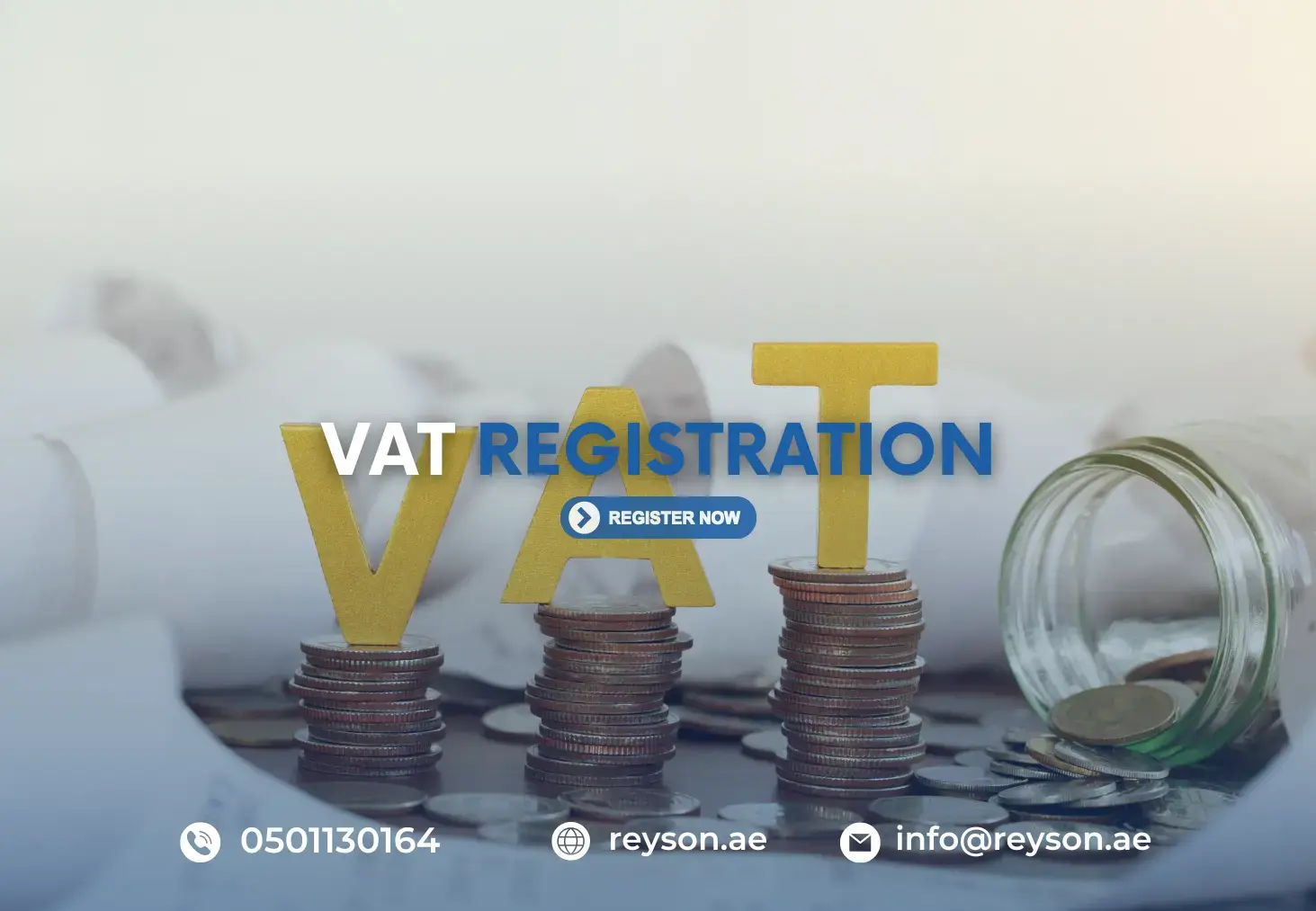
Registering for VAT is important for businesses because it allows them to legally operate and sell their products or services in the UAE. When a business is registered for VAT, it means they can charge VAT on their sales and then pay that collected VAT to the government.
What is VAT Registration?
Value Added Tax (VAT) was introduced in the UAE in 2018 as a consumption tax levied on the value added to goods and services at each stage of the supply chain. VAT registration procedure in Dubai is an important step for businesses operating in the UAE to comply with tax regulations.
VAT registration is like signing up officially with the government to join a tax system called Value Added Tax (VAT). The main goal of VAT registration is to help businesses collect and pay the right amount of VAT on the things they sell, which is important to follow the tax rules and support the government with tax money.
There are two types of VAT Registration:
Mandatory VAT Registration:
Businesses are required to register for VAT when they meet the registration criteria set by the Federal Tax Authority. In the UAE, if a business’s taxable supplies and imports exceed AED 375,000 during the previous 12 months, or are expected to exceed AED 375,000 within the next 30 days, VAT registration becomes mandatory. This rule ensures compliance and proper tax contribution from eligible businesses.
Voluntary VAT Registration:
Businesses with taxable supplies exceeding AED 187,500 but not exceeding AED 375,000 in the preceding 12 months or anticipated to exceed AED 375,000 in the next 12 months can choose to register voluntarily. Some businesses can choose to register for VAT even if they don't have to by law. They might do this to get back some of the VAT they paid on things they bought for their business or to show they are reliable in business. But once they register voluntarily, they have to follow all the VAT rules just like mandatory registrations.
The main difference between these two types is that mandatory registration is a must based on rules, while voluntary registration is a choice businesses can make for some benefits or to show they are responsible for handling taxes.
Who Should Register for VAT in UAE
Importance of VAT Registration in UAE
VAT registration is required for businesses to:
- Comply with tax laws and avoid penalties
- Claim input tax credits
- Avoid additional costs on goods and services
- Improve business credibility and reputation
- Expand business opportunities and competitiveness
All these things necessarily specify the importance of VAT registration in Dubai, UAE
Who Should Register under VAT?
It's a common question among business owners and individuals about who should be registered for VAT in the UAE . The following details helps to get a better idea of the same.
VAT Registration Eligibility
Local businesses and international corporations operating in the UAE must register for VAT within 30 days of their taxable supplies and imports exceeding the mandatory registration threshold of AED 375,000. Enterprises that do not meet the required limit can still register voluntarily.
The following businesses or individuals should register under VAT in UAE:
Mandatory Registration:
- Businesses must register for VAT if their taxable supplies and imports exceed AED 375,000 in the past 12 months.
- Businesses must also register if they are expected to exceed AED 375,000 within the next 30 days.
Voluntary Registration:
- Businesses with an annual taxable supply below AED 375,000.
- Businesses making zero-rated supplies (e.g., exports).
- Businesses wanting to claim VAT refunds.
- Businesses seeking to improve their credibility and reputation.
Other Eligible Persons:
- Non-resident businesses making taxable supplies in the UAE.
- Businesses providing services related to real estate, including renting or leasing.
- Businesses involved in the supply of goods and services are subject to VAT, even if the turnover is below the threshold.
To be eligible for VAT Registration in Dubai, businesses must:
- Be a legal entity (individual, company, partnership, etc.).
- Carry out economic activities (business, trade, profession, etc.).
- Make taxable supplies (goods and services subject to VAT).
Below is a link to our detailed article on the eligibility criteria for VAT registration in Dubai, UAE.
Eligibility Criteria for VAT Registration in UAE
Benefits of Voluntary Registration
Businesses that sign up voluntarily can get back some of the VAT they paid on things they bought for their business, which can help reduce the total VAT they owe. Voluntary registration also shows that a business is following tax rules and can make it look good to customers and partners.
If a business makes a lot of sales or brings in a lot of stuff, they have to join VAT. If they choose to join even though they don't have to, they can get back some of the tax they paid on their purchases and look good in the eyes of others.
VAT Turnover Calculation for Registration in UAE
To calculate the VAT turnover for Registration in UAE, follow these steps:
Identify taxable supplies: Include all goods and services subject to VAT at the standard rate (5%) or zero rate (0%).
Calculate the value of taxable supplies:
- For goods: the value of goods sold + customs duty + excise tax (if applicable)
- For services: value of services provided
Include exempt supplies: Add the value of exempt goods and services (e.g., financial services, healthcare, education)
Add the value of imported goods: Include the customs duty and excise tax (if applicable)
Example:
- Taxable goods sold: AED 1,000,000
- Customs duty: AED 50,000
- Excise tax: AED 20,000
- Taxable services provided: AED 500,000
- Exempt goods sold: AED 200,000
- Imported goods (customs duty and excise tax): AED 30,000
Total VAT turnover: AED 1,800,000 (AED 1,000,000 + AED 50,000 + AED 20,000 + AED 500,000 + AED 200,000 + AED 30,000)
If the total VAT turnover exceeds AED 375,000, the business must register for VAT.
VAT
Tax Consultant Services for Industries
- Tax Consultant Services for Insurance in UAE
- Tax Consultant Services for Event Management in UAE
- Tax Consultant Services for Manufacturing Industry in UAE
- Tax Consultant Services for Marine Industry in UAE
- Tax Consultant Services for Oil and Gas in UAE
- Tax Consultant Services for Real Estate in UAE
- Tax Consultant Services for Restaurants in UAE
- Tax Consultant Services for E-Commerce in UAE
- Tax Consultant Services for Logistics & Transportation in UAE
- Tax Consultant Services for Technology in UAE
- Tax Consultant Services for the Construction Industry
- Tax Consultant Services for Healthcare in UAE
- Tax Consultant Services for the Education Industry in UAE
- Tax Consultant Services for Retail and Wholesale Trade
- Tax Consultant Services for Automotive Industry
- Tax Consultant Services for Hospitality and Tourism in UAE


Latest Blogs

22
Jan
Accounts Outsourcing Services in Dubai: What Every Business Owner Should Know
Accounts Outsourcing Services in Dubai cover essential finance functions through a structured and professional workflow, compliant, and financially organized.
READ MORE →
19
Jan
VAT Impact on Company Profit in UAE: Key Factors Businesses Must Understand
Explore how VAT impacts company profit in the UAE, including compliance costs, pricing strategies, and the role of professional VAT services for businesses.
READ MORE →
19
Jan
Understanding VAT Refund Rules for Tourists in UAE Under FTA Guidelines
This guide explains VAT refund rules for tourists in the UAE, including eligibility, qualifying purchases, refund process, and key FTA guidelines to claim VAT refund in UAE.
READ MORE →
22
Jan
Why AML Checks Are More Important Than Ever in 2026?
Learn why AML compliance is vital in 2026. Avoid fines, protect your business, and meet new regulatory standards with strong AML checks.
READ MORE →
23
Jan
VAT Registration Threshold in UAE: Requirements, Calculation, and Compliance
READ MORE →
22
Jan
Amendment of the United Arab Emirates (UAE) VAT Decree-Law from 1st January 2026
UAE VAT Decree-Law amendments effective 2026 explained, including reverse charge updates, refund time limits, and enhanced FTA authority.
READ MORE →
19
Jan
Accounting Services in Dubai: A Practical Guide for Growing Companies
Accounting services in UAE, businesses gain clarity, confidence, and control over their finances allowing them to focus on what matters most: building and scaling their business in the UAE's competitive market.
READ MORE →
23
Jan
Corporate Tax Advance Pricing Agreements in the UAE
Advance Pricing Agreements (APAs) in the UAE help businesses obtain certainty on transfer pricing methods under the Corporate Tax regime. Learn how APAs work, eligibility criteria, benefits, and compliance requirements set by the UAE Federal Tax Authority
READ MORE →
23
Jan
UAE FTA Moves to Free Digital Tax Certificates: What It Means for Businesses?
The UAE FTA now offers free digital tax registration certificates with QR codes, eliminating paper fees and simplifying compliance for businesses.
READ MORE →
21
Jan
UAE FTA Removes Fees for Paper Tax Certificates, Moves to Free Digital Certificates
UAE Federal Tax Authority removes fees for paper tax certificates and introduces free digital certificates with QR codes from January 2026.
READ MORE →