
Corporate Tax in Sharjah Free Zone
Setting up your business in a Sharjah Free Zone may feel like finding a tax haven, but even paradise has its paperwork! With the introduction of the UAE’s new corporate tax regime, businesses need to understand how the rules apply. The Corporate Tax in Sharjah Free Zone aims to support businesses, especially those with international operations. If eligible entities meet all the legal requirements, they can enjoy a 0% tax rate while non-qualifying businesses will face the standard 9% corporate tax in the UAE.
Sharjah, located in the UAE, has many free zones, distinguished by the variety of business incentives available, including no restrictions on 100% foreign ownership, no import/export duties, and no personal income tax. Free zones emphasize specific industries and boast world-class infrastructure and logistics facilities.
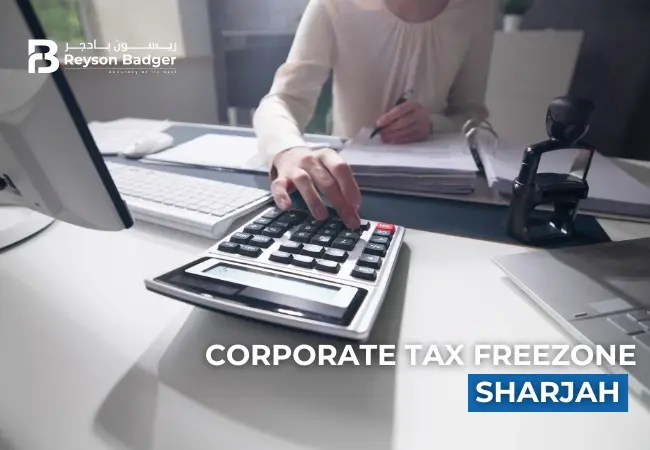
What is a Free Zone?
A free zone is a specially designated zone where companies operate with different benefits including special tax, customs, and import/export benefits. The major aim of a free zone is to attract foreign investment, boost trade, and increase the economic growth. The UAE has over 40 free zones, including Sharjah Free Zone, and each of them are specifically catered to different industries. The corporate tax in Sharjah Free Zone is different from the other free zones and is discussed in detail below.
What is Corporate Tax in Sharjah Free Zone?
Corporate tax in Sharjah Free Zone refers to a tax payable for the net profit earned by businesses operating within the Free Zone. However, the companies in Sharjah Free Zone benefit from tax exemptions and reduced tax rates based on their business activities and compliance with the federal tax regulations of the UAE.
Different Free Zones in Sharjah
There are also several Free Zones in Sharjah targeting different businesses and industries. Among the most prominent are:
- Sharjah Airport International Free (SAIF) Zone : SAIF Zone is one of the major and most important free zones in Sharjah. This provides businesses access to Sharjah's international airport and has a high-standard facility. SAIF caters to industries including manufacturing, aviation, trading, and logistics.
- Hamriyah Free Zone (HFZ) : Being on the coastal side, it is an industrial oriented area, which allows easy access to ports and infrastructure suitable for the industry, such as oil and gas, maritime, steel, and petrochemicals. Its HFZ has cheaper land leasing with logistics solutions, making it perfect for heavy industries.
- Sharjah Publishing City(SPC) : SPC is the first free zone in the country, particularly focusing on the publishing and printing industries. To this end, it offers a full range of services to authors, publishers, and content creators by providing exclusive spaces for creativity and innovation in both cultural and creative business sectors.
- Sharjah Media City Free Zone (SHAMS) : SHAMS focuses on media, entertainment, and digital industries, providing an environmental setup for media start-ups and entrepreneurs. It offers packages and facilities for setting up a business, content creation, production, and broadcasting on a competitive worldwide basis.
- U.S.A Regional Trade Centerer Zone (USARTC) Free Zone : USARTC is a means of offering business trading opportunities between the U.S. and the Middle East, with it acting as a gateway to the development of relations, expansion in market penetration, and business operations in a tax-friendly environment. It offers ideal opportunities for U.S.-based companies that want to gain entry into the UAE and Middle Eastern markets.
Key Benefits of Free Zone Corporate Tax
Sharjah Free Zones boasts of several tax benefits when it comes to corporate tax. These attractive deals are geared towards bringing international and local businesses to this tax-friendly hub. Among them are the following:
0% corporate Tax Rate on Qualifying Income for Free Zone Companies
Free Zone entities may obtain a 0% corporate tax rate on qualifying income only if they meet all conditions to be a Qualifying Free Zone Person (for example: qualifying activities/income, substance requirements, de-minimis test and compliance with FTA conditions). Income that is non-qualifying is subject to the standard 9% rate.
Eligibility Criteria for the 0%Tax Rate
The companies should go through some conditions established by the UAE government, which include:
- Nature of Business Activity: Not all business activities will get exemption from corporate tax 0%. Only a few business kinds will be allowed by the government. For example, international trade and specific services.
Location of Income Generation: In case the business is carried out outside the UAE or from one free zone to another, the income generated will be eligible for tax exemption. - Proper Compliance with Regulatory Requirements: Companies need to comply with the local regulatory requirements which include substance and physical office space, for example, and reporting duties.
Tax Differences Between Free Zone and Mainland Corporate Tax
There are several significant differences in the corporate tax regimes between Free Zones and Mainland UAE:
- Tax Rate: Free Zone companies qualifying for the regime can enjoy a 0% corporate tax rate on qualifying income, whereas Mainland companies pay the standard 9% corporate tax rate on their profits over AED 375,000.
- Business Scope: Free Zone companies are mostly allowed to carry out their business in the free zone or across borders. They are strictly prohibited from trading directly with the UAE Mainland unless they form an alliance with a local distributor or open a branch in the mainland. However, Mainland companies can do business anywhere in the UAE freely.
Tax Exemptions: The mainland companies do not have all the tax exemptions just like free zone companies. Mainland entities are more exposed to the entire scope of UAE corporate taxation when compared to free zone companies who enjoy tax exemptions on specific qualifying income streams.
These advantages make Sharjah Free Zones the most attractive destination for companies interested in setting up facilities in the UAE with minimal tax liabilities while leveraging strategic access to international markets.
What is a Qualifying and Non Qualifying Income?
In the UAE corporate tax regime, free zone businesses, including those in Sharjah, can enjoy a 0% corporate tax rate on "qualifying income." However, income failing the qualifying income test is taxed at a standard corporate tax rate of 9%. Hence, it becomes crucial to distinguish between qualifying and non-qualifying income.
Who Can Be a Qualifying Free Zone Person?
A Qualifying Free Zone Person is an entity incorporated in a free zone that meets the following requirements to benefit from a 0% corporate tax rate on qualifying income. To qualify an entity must meet the following:
- The institution must be registered and licensed in a UAE Free Zone, for example, Sharjah Airport International Free Zone (SAIF Zone) or Hamriyah Free Zone (HFZ).
- Has sufficient substance for the time being, including maintaining a physical office having full-time employees on its payroll, and conducting core income-generating activities in the free zone.
- To qualify for 0% treatment a free zone entity must not have elected to be subject to the standard Corporate Tax rules and rates - an election to be taxed under the standard rules disqualifies the entity from QFZP status and the 0% treatment (subject to the statutory rules).
- Has carried out qualifying activities under the UAE corporate tax legislation.
What is a Qualifying Activity?
Qualifying activities are simply certain business operations that make free zone enterprises qualified to enjoy the 0% corporate tax advantage. Generally speaking, qualifying activities involve international business, trade, or services that have no direct competition with businesses on the mainland. Here are some illustrations of qualifying activities for your reference:
- International trade in goods and services
- Providing services to companies outside the UAE
- Manufacturing or industrial business carried out in the free zone.
- Companies holding dividends or capital gains from free zone companies.
Qualifying Income for Free Zone Entities
Qualifying income is income generated by operations that are qualified for free zones tax exemption. This includes income:
- Revenue from trading or supplying goods and services to parties outside the UAE.
- Revenue from trading with other free zone businesses.
- Passive income such as dividends, royalties, or capital gains from owning shares in other qualifying free zone businesses.
Examples of Non Qualifying Income Subject to 9% Corporate Tax
Non-exempt income is any income not qualifying as part of the free zone activities and therefore is subject to the regular 9% corporate tax rate. Examples are as follows:
Corporate business income originates from direct business operations within the UAE mainland but through a less-than-adequate mainland structure or without the services of a local distributor.
Income from regulated financial or insurance services; these types of activities usually cannot be exempted from free zone tax.
Revenue is generated from specific professional services that are offered to the UAE mainland clients.
Any income derived from activities that do not meet the "core" interpretation of the free zone's exempt status, such as retail sales made within the free zone to UAE customers.
De Minimis Rule for Free Zone Companies
The De Minimis Rule concerns free zone companies that earn a small percentage of non-qualifying income. Under the de-minimis rule a free zone company’s non-qualifying income must not exceed the lower of 5% of total revenue or AED 5,000,000; if it exceeds that limit the entity risks losing qualifying status for 0% treatment.
If the free zone company's non-qualifying income exceeds that threshold, then the entire income may lose its tax-exempt status meaning all its revenues will be subject to the standard 9% corporate tax rate. Therefore, the free zone companies should monitor their non-qualifying income such that it does not exceed the De Minimis limit.
Corporate tax registration process in Free Zones
Registration for corporate tax in Sharjah Free Zones is on the whole very straightforward and can take the following steps:
- Log in to the Emara Tax Portal: Use your login credentials, such as UAE Pass, to access the Emara Tax Portal. If you don't have an account, create one, or reset your password if needed.
- Add Taxable Person: Ensure a taxable person is linked to your account. If not, create a new taxable person by providing the required details.
- Open Corporate Tax Dashboard: Select the taxable person, and the Corporate Tax Dashboard will open.
- Start Enrolment: Click on "Register" in the Corporate Tax section, review the instructions, and check the box to proceed.
- Fill Entity Section: Enter all entity details based on your business type, then click “Next.”
- Fill Identification Section: Provide your trade license and business activity details, then click “Next.”
- Complete Contact Details: Enter your registered business address and click "Next" to continue.
- Authorized Signatory Section: Upload the details of the authorized signatories, including any required attachments such as a power of attorney, if applicable.
- Verify and Declare: Review all the information, check the declaration box, and submit your application.
- Corporate Tax Registration Number: Once submitted, reference numbers will be generated automatically. The FTA will notify you regarding approval, rejection, or if additional information is needed.
Reporting and filing obligations for Free Zone businesses
The major obligations of Sharjah free zone entities include the following:
- Annual Corporate Tax Return: It is mandatory to submit an annual corporate tax return to the FTA. This must include both qualified and non-qualified income.
- Conservative Preservation of Documents of Accounts: All accounts must be preserved for at least five years.
- Declaration of Income: The total income is required to be declared. The non-qualified source, however, cannot exceed the De Minimis threshold.
- Economic Substance Report: If applicable, file an economic substance report to show local business activities.
- Annual Audited Financial Statements: Some businesses are required to file annual audited financial statements.
These duties then satisfy the conditions, and that is how one continues enjoying the benefits of the tax.
ZoneConsequences of non compliance
Sharjah Free Zone corporate tax non-compliance shall attract severe penalties that are categorized as:
1. Registration
Failure to register on time can attract an administrative penalty of AED 10,000; however, the FTA has published waiver and refund conditions under which this penalty may be waived or refunded if the taxpayer meets the specified criteria (for example, submitting the first corporate tax return or annual declaration within seven months from the end of the first tax period).
2. Penalties and Fines
Late Return: Failure to file tax returns or required reports shall be accompanied by fines between AED 1,000 and AED 50,000.
Incorrect Information: Submitting inaccurate or incomplete tax data can lead to penalties between AED 5,000 and AED 50,000.
3. Loss of 0% Tax Rate
A company may lose its entitlement and entitlement to 0% corporate tax. That's all its income will be levied on a standard 9% corporate tax, as a result of not complying with the regulations, including breaking the De Minimis rule, which entails economic substance compliance.
4. Legal and Business Consequences
Non-compliance can even lead to legal action, suspension of trade licenses, or business closure by the free zone authority if the breach is repeated or habitual.
5. Interest on Unpaid Taxes
If there is non-compliance and taxes are owed, then interest will be applicable on the unpaid amount to burden an individual financially.
Maintaining compliance is therefore very important in order not to face these penalties and lose whatever tax benefits Sharjah offers.
Corporate Tax Planning and Advisor
Tax consultants such as Reyson Badger help Sharjah Freezone businesses develop an ideal tax strategy, and this is completed in the areas of tax compliance as follows:
- Tax Compliance: UAE tax laws and timely filing of tax returns without errors.
- Strategy Development: Personalized approach to reduce tax payables and pinpoint which activities are eligible for a 0% tax rate.
- Ongoing Support: Preparation to be audited and constant checks to ensure continuous compliance and capture fresh opportunities.
Professional Tax Advisory ensures proper tax planning and compliance.
How does Corporate Tax for Free Zone Impact Businesses?
- Identify Deductions to Deduct: Utilize deductible expenses, for example, salaries, rent, and utilities, to reduce taxable income.
- Save Time and Money: Allow professional help with tax compliance to save time and money spent on operating activities
- Valuable Insights: Understand how tax planning can be done effectively to make informed business decisions.
Why choose Reyson for Corporate Tax in Sharjah Free Zone?
Navigating Corporate Tax in Sharjah Free Zones can be complex, but understanding its implications and benefits is crucial for business success. By identifying tax-deductible expenses, saving time and money, and gaining valuable insights, businesses can effectively manage their tax obligations and optimize their financial performance.
We encourage you to seek expert advice from Reyson Badger to ensure you’re maximizing your tax strategy and staying compliant with regulations.
Take the first step towards optimizing your Free Zone corporate tax today. Contact us for a consultation!
FAQ
Corporate Tax in Sharjah Free Zone
Latest Blogs
Accounts Outsourcing Services in Dubai: What Every Business Owner Should Know
Accounts Outsourcing Services in Dubai cover essential finance functions through a structured and professional workflow, compliant, and financially organized.
READ MORE →
VAT Impact on Company Profit in UAE: Key Factors Businesses Must Understand
Explore how VAT impacts company profit in the UAE, including compliance costs, pricing strategies, and the role of professional VAT services for businesses.
READ MORE →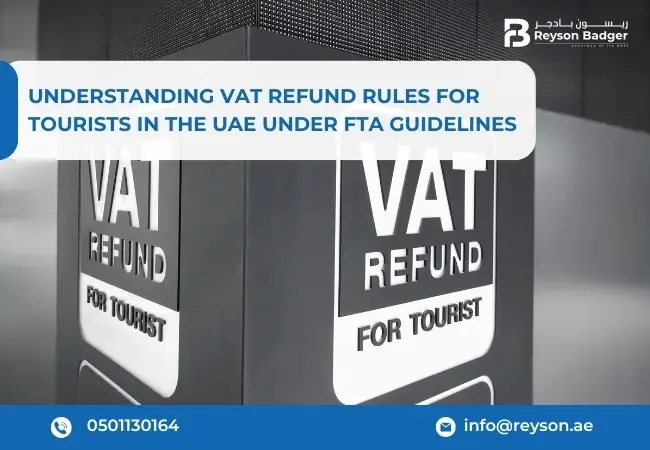
Understanding VAT Refund Rules for Tourists in UAE Under FTA Guidelines
This guide explains VAT refund rules for tourists in the UAE, including eligibility, qualifying purchases, refund process, and key FTA guidelines to claim VAT refund in UAE.
READ MORE →
Why AML Checks Are More Important Than Ever in 2026?
Learn why AML compliance is vital in 2026. Avoid fines, protect your business, and meet new regulatory standards with strong AML checks.
READ MORE →
VAT Registration Threshold in UAE: Requirements, Calculation, and Compliance
READ MORE →
Amendment of the United Arab Emirates (UAE) VAT Decree-Law from 1st January 2026
UAE VAT Decree-Law amendments effective 2026 explained, including reverse charge updates, refund time limits, and enhanced FTA authority.
READ MORE →
Accounting Services in Dubai: A Practical Guide for Growing Companies
Accounting services in UAE, businesses gain clarity, confidence, and control over their finances allowing them to focus on what matters most: building and scaling their business in the UAE's competitive market.
READ MORE →
Corporate Tax Advance Pricing Agreements in the UAE
Advance Pricing Agreements (APAs) in the UAE help businesses obtain certainty on transfer pricing methods under the Corporate Tax regime. Learn how APAs work, eligibility criteria, benefits, and compliance requirements set by the UAE Federal Tax Authority
READ MORE →
UAE FTA Moves to Free Digital Tax Certificates: What It Means for Businesses?
The UAE FTA now offers free digital tax registration certificates with QR codes, eliminating paper fees and simplifying compliance for businesses.
READ MORE →
UAE FTA Removes Fees for Paper Tax Certificates, Moves to Free Digital Certificates
UAE Federal Tax Authority removes fees for paper tax certificates and introduces free digital certificates with QR codes from January 2026.
READ MORE →