
Net Worth Certificate Format for Individuals & Companies
23-Jan-2026
Achieve international standards compliance and enhance your business credibility with expert ISO certification support.
ISO Certification Services
ISO Certification Services in UAE
Obtaining ISO certification in UAE is a significant milestone for organisations aiming to showcase their commitment to excellence, quality, and customer satisfaction. In the United Arab Emirates (UAE), where businesses are focused on operational efficiency and global competitiveness, ISO certification services in UAE have become a hallmark of credibility and trust. As a leading hub for international trade and commerce, Dubai and other emirates provide an ideal environment for companies to achieve and benefit from UAE ISO Certification Services, opening doors to new business opportunities and partnerships. With our expert ISO certification services, we guide organizations through the complex certification process, ensuring a smooth, compliant, and successful journey toward achieving ISO certification in Dubai and across the UAE.
What is ISO Standard?
The International Organization for Standardization (ISO) is an independent and non-governmental organization, founded in 1947 and headquartered in Geneva, Switzerland. It has representatives from over 160 national standards organizations around the world. The standards developed by ISO aim at ensuring quality, safety, efficiency, and interoperability of products and services at a world level for businesses seeking ISO Certification services in UAE. Among them are the fields of technology, manufacturing, healthcare, food safety, environmental management, and information security. ISO publishes international standards in various sectors.
Popular ISO Standards
Quite several ISO standards have become famous and widely embraced by industries, particularly those seeking ISO Certification in Dubai. Significant ones are as follows:
- ISO 14001: Focuses on environmental management systems and drives organisations to improve their environmental performance for effective use of resources and waste reductions.
- ISO 45001: Addresses occupational health and safety management systems to provide organisations the framework to develop improved employee safety solutions and the identification of workplace risks.
- ISO 22000: Concerns food safety management systems, which make sure that food-and-their-products are safe during the manufacture-through-supply chain process.
- ISO 27001: Relates to information security management systems to help organizations in the systematic and cost-effective protection of sensitive information.
- ISO 13485: Specifies requirements in quality management systems for organizations involved within the medical device industry to ensure that products consistently meet customer and regulatory requirements.
- ISO 50001: Deals with energy management systems to assist in enhancing energy efficiency and contributing to a reduction in greenhouse gas emissions.
- ISO 37001: This standard includes recommendations for setting up, executing, and sustaining an anti-bribery management system for the organisation to prevent further bribery.
- ISO 21001: The standard is designed for management systems committees created for educational organisations with the purpose of improving the management practice quality of educational services.
- ISO 41001: The standard that refers to the standards of facility management systems involves a framework for managing facilities effectively and efficiently.
- ISO 22301: This applies to business continuity management systems so that organisations can prepare and respond to disruptive incidents proficiently.
- ISO 9001: ISO 9001 is a globally recognised standard for Quality Management Systems, offering a structured framework and guiding principles to ensure customer and stakeholder satisfaction through effective organisational management.
What is ISO Certification?
ISO Certification is an internationally recognised third-party validation that confirms an organisation has established, implemented, and consistently maintains a robust Quality Management System (QMS) in accordance with the standards set by the International Organisation for Standardisation (ISO). Through professional ISO Certification Services, companies can streamline the certification process, ensure compliance, and adopt globally accepted best practices. This certification reflects a strong commitment to quality, operational efficiency, safety, and continuous improvement, while also enhancing credibility and customer trust.
Importance of ISO Certification
ISO certification is crucial for businesses seeking to:
- Enhance credibility: recognised globally, increasing trust and confidence among customers, stakeholders, and regulatory bodies.
- Improve quality: Ensure that an organisation has implemented a QMS that meets international standards, resulting in improved product/service quality and reduced errors.
- Increase efficiency: promotes process standardisation, reducing waste, and improving operational efficiency.
- Ensure safety: demonstrates an organisation's commitment to safety, reducing the risk of accidents and injuries.
- Comply with regulations: helps organisations comply with regulatory requirements, reducing the risk of non-compliance and associated penalties.
- Gain competitive advantage: it can be a differentiator in competitive markets, setting an organisation apart from its competitors.
Benefits of ISO Certification in UAE
ISO certification in UAE offers additional benefits, including:
- Increased business opportunities: helps organisations secure government contracts and partnerships with large corporations.
- Improved market reputation: enhances an organisation's reputation in the UAE market, increasing trust and confidence among customers and stakeholders.
- Compliance with UAE regulations: helps organisations comply with UAE regulations and standards, reducing the risk of non-compliance.
Types of ISO Certification Services in UAE
ISO Certification services in UAE are essential for organisations looking to enhance their operational efficiency, ensure quality, and comply with international standards. Various types of ISO certifications in the UAE are recognised across different industries, each serving specific purposes. Here are some of the most prominent ISO certifications available:
- ISO 9001: Quality Management System (QMS)
ISO 9001 is one of the most widely recognised standards globally, focusing on quality management principles. It helps organisations ensure consistent quality in their products and services, leading to improved customer satisfaction and operational efficiency.
2. ISO 14001: Environmental Management System (EMS)
ISO 14001 outlines a framework for enterprises to successfully manage their environmental responsibilities. This standard helps businesses minimise their environmental impact and comply with regulatory requirements.
3. ISO 45001: Occupational Health and Safety (OH&S) Management System
ISO 45001 sets the standards for occupational health and safety management systems, enabling organisations to improve employee safety, reduce workplace risks, and create safer working environments.
4. ISO 22000: Food Safety Management System (FSMS)
ISO 22000 outlines the requirements for a food safety management system, ensuring that food products are safe for consumption throughout the food supply chain. It applies to all organisations involved in food production and distribution.
5. ISO 27001: Information Security Management System (ISMS)
ISO 27001 is the leading standard for information security management systems. It provides a systematic approach to managing sensitive company information, ensuring its confidentiality, integrity, and availability.
6. ISO 13485: Quality Management System for Medical Devices
ISO 13485 specifies requirements for quality management systems in the medical device industry. This certification ensures that medical devices meet regulatory requirements and consistently perform as intended.
7. ISO 50001: Energy Management System
ISO 50001 focuses on energy management practices, helping organisations improve energy efficiency, reduce costs, and enhance sustainability efforts.
8. ISO 37001: Anti-Bribery Management System
ISO 37001 provides guidelines for establishing an anti-bribery management system, helping organisations prevent bribery and promote ethical business practices.
9. ISO 21001: Educational Organisations Management System
ISO 21001 focuses on improving educational organisations' management systems, enhancing the quality of educational services provided to stakeholders.
10. ISO 22301: Business Continuity Management System
ISO 22301 outlines the requirements for a business continuity management system, enabling organisations to prepare for and respond effectively to disruptive incidents.
How to Get ISO Certification in UAE?
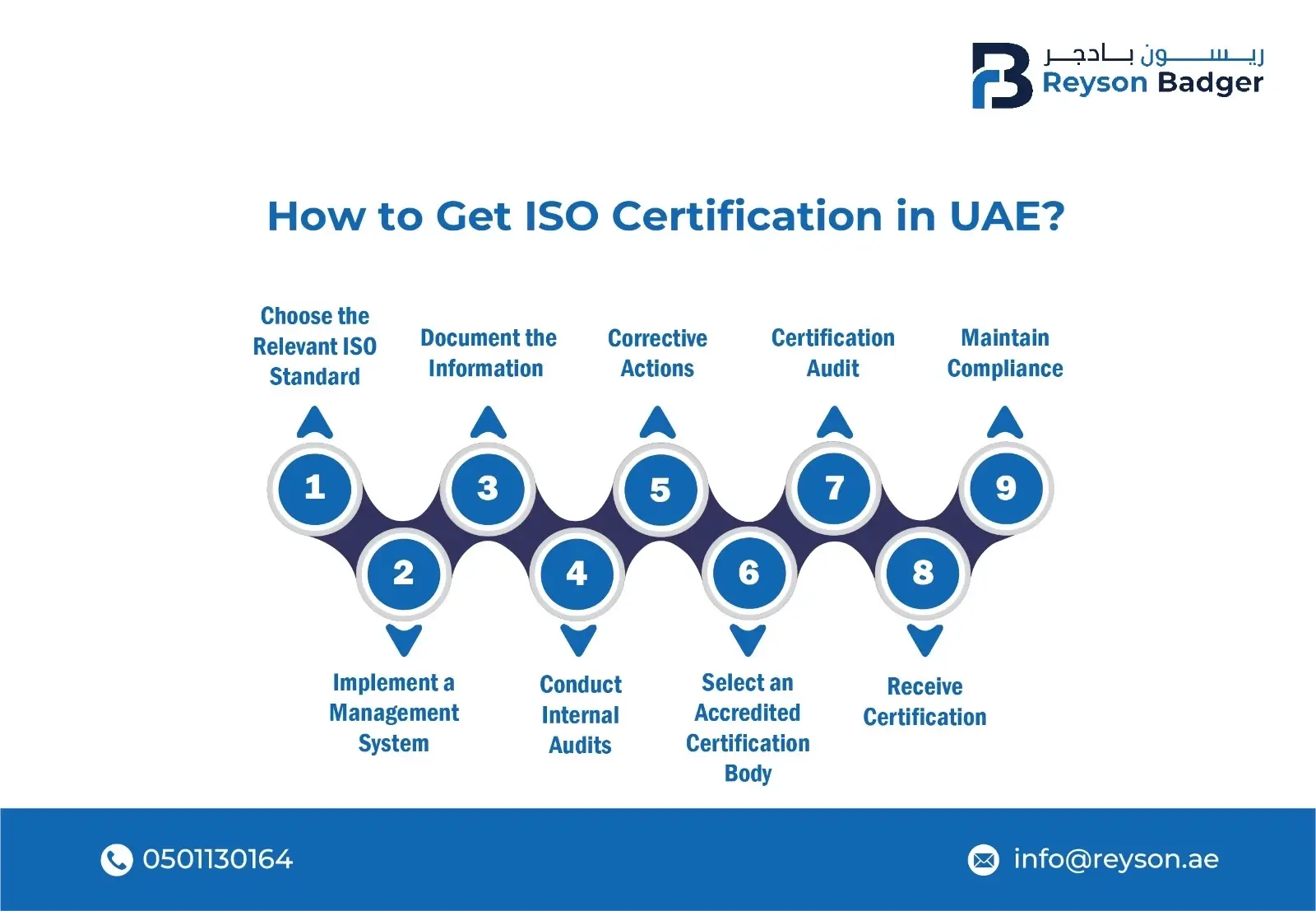
Obtaining ISO certification in UAE involves a systematic process that ensures organisations meet international standards. Here are the key steps to follow:
- Choose the Relevant ISO Standard: Identify which ISO standard aligns with your organisation's goals and industry requirements (e.g., ISO 9001 for quality management, ISO 14001 for environmental management).
- Implement a Management System: Develop and implement a management system that complies with the selected ISO standard. This includes establishing policies, procedures, and processes that align with the standard's requirements.
- Documented Information: Prepare necessary documentation, including manuals, procedures, and records that demonstrate compliance with the ISO standard.
- Conduct Internal Audits: Perform internal audits to assess the effectiveness of your management system and identify any non-conformities. This step helps ensure readiness for the external audit.
- Corrective Actions: Address any identified non-conformities by implementing corrective actions to improve processes and ensure compliance with the standard.
- Select an Accredited Certification Body: Choose a reputable ISO certification company in the UAE that is accredited by recognised bodies. Ensure they have experience in your industry.
- Certification Audit: Schedule an audit with the selected certification body. The auditors will evaluate your management system against the requirements of the chosen ISO standard.
- Receive Certification: If your organisation meets all requirements, you will receive your ISO certification, typically valid for three years, subject to periodic surveillance audits.
- Maintain Compliance: Continuously monitor and improve your processes to maintain compliance with the ISO standard and prepare for renewal audits.
These steps provide a structured approach to achieving ISO certification, ensuring that organisations can effectively implement and maintain their management systems.
Renewal of ISO Certification in Dubai
ISO certification is valid for a period of three years, after which organisations must undergo a renewal process to maintain their certification status. The renewal process typically involves:
- Document Preparation: Gather all relevant documents, including previous audit reports and records demonstrating compliance with the ISO standards.
- Internal Audit: Conduct an internal audit to ensure that all processes are functioning correctly and identify areas for improvement before the renewal audit.
- Application for Renewal: Submit an application for renewal to your chosen certification body well ahead of your certification's expiration date.
- Renewal Audit: The certification body will conduct a renewal audit to assess ongoing compliance with the ISO standards.
- Receive Renewal Certification: Upon successful completion of the audit, your organisation will receive renewed ISO certification, confirming continued adherence to international standards.
How ISO Certification Standards Help Your Business?
ISO certification Services offer numerous advantages that can significantly enhance your business operations and overall performance. Here are some key ways ISO certification can benefit your organization:
- Promotes Best Practices: ISO standards provide access to internationally recognized best practices, helping businesses improve their processes across various areas such as quality management, environmental performance, and information security.
- Increases Productivity: By adhering to ISO standards, organizations are required to clearly define, document, and monitor their processes. This structured approach leads to increased efficiency and productivity.
- Enhances Customer Satisfaction: ISO certification consultants in UAE help improve complaint management and quality control, leading to higher levels of customer satisfaction. Certified organizations often experience fewer customer complaints and better client retention.
- Improves Revenue: Many companies that adopt ISO standards report increased revenues due to enhanced operational efficiency and improved product quality. Research indicates that certified businesses often outperform non-certified counterparts in terms of financial performance.
- Opens New Markets: ISO certification can provide access to new markets and opportunities, including eligibility for government contracts and partnerships with larger companies that require adherence to specific standards.
- Fosters Team Commitment: The certification process encourages collaboration between management and employees, fostering a more engaged workforce committed to achieving common objectives.
- Applicable to All Sizes: ISO certification is beneficial for businesses of all sizes, including small and medium enterprises (SMEs), helping them adopt best practices and improve operational efficiency.
- International Acknowledgement and Recognition: Being ISO-certified signals to clients and partners that your organisation adheres to internationally recognised standards. This recognition can enhance your reputation and open doors to global markets.
What are the Elements that Influence ISO Certification Prices in UAE?
The ISO certification in the UAE can vary significantly based on several factors:
- Type of Certification: Different ISO standards have varying requirements and complexities, which can influence the overall cost. For example, certifications like ISO 9001 (Quality Management) may differ in price from ISO 27001 (Information Security).
- Size of the Organisation: Larger organisations typically incur higher costs due to the complexity of their operations and the need for more extensive documentation and training.
- Scope of Certification: The broader the scope of the certification (e.g., multiple locations or departments), the higher the associated costs for audits and implementation.
- Consulting Fees: Engaging ISO certification consultants in the UAE can add to the overall cost, but may provide valuable expertise that streamlines the certification process.
- Training Costs: Organisations may need to invest in training employees on ISO standards and practices, which can contribute to the overall cost of certification.
- Audit Fees: Certification bodies charge fees for conducting initial audits and subsequent surveillance audits, which are necessary for maintaining certification status.
How to Choose the Right ISO Certification Body in Dubai, UAE?
When selecting an ISO certification body in Dubai, it’s essential to consider several factors to ensure you partner with a reputable and competent organisation. Here are some crucial points to remember:
- Accreditation: Ensure that the certification body is accredited by recognised organisations, such as the Emirates International Accreditation Center (EIAC). Accreditation guarantees that the body meets international standards for certification.
- Experience and Expertise: Look for ISO certification bodies in the UAE with extensive experience in your specific industry. A body that understands your sector can provide more relevant insights and support throughout the certification process.
- Range of Services: Consider whether the certification body offers a comprehensive range of services, including training, consultancy, and post-certification support. This can be beneficial for ongoing compliance and improvement.
- Reputation: Research the reputation of the certification body by reading client testimonials and reviews. A strong track record of successful certifications can indicate reliability and effectiveness.
- Cost and Transparency: Inquire about the pricing structure for certification services. A reputable body should provide clear information about costs associated with the certification process without hidden fees.
- Support and Communication: Choose a certification body that offers excellent customer support and communication throughout the certification process. This guarantees that you will always have direction.
Best ISO Consultants In the UAE - Reyson Badger
Reyson Badger stands out as one of the best iso consultants in UAE, providing expert guidance throughout the ISO certification process. Their team is dedicated to helping organisations understand and implement ISO standards effectively, ensuring compliance with international requirements.
ISO Certification services in the UAE are a purposeful step toward quality and expansion, not just a legal need. By achieving certification, businesses position themselves as leaders in their industry, committed to quality and continuous improvement. Engaging with experienced ISO certification bodies in UAE, like Reyson Badger, can facilitate this journey, ensuring that organisations reap the full benefits of ISO standards while enhancing their operational capabilities and market competitiveness.
FAQs
ISO Certification Services
ISO certification services in the UAE build trust, optimise operational performance, and ensure companies are in line with legal and industrial requirements.
Some of the most sought-after include ISO 9001 (Quality Management), ISO 14001 (Environmental Management), and ISO 45001 (Occupational Health & Safety).
Most of them are valid for three years and require surveillance audits every year.
Many steps, like documentation and training, can be handled virtually, but final audits are usually conducted on-site by certification bodies.
The cost of ISO certification depends on factors such as the type of certification, company size, and the auditing process.

Latest Blogs

22
Jan
Accounts Outsourcing Services in Dubai: What Every Business Owner Should Know
Accounts Outsourcing Services in Dubai cover essential finance functions through a structured and professional workflow, compliant, and financially organized.
READ MORE →
19
Jan
VAT Impact on Company Profit in UAE: Key Factors Businesses Must Understand
Explore how VAT impacts company profit in the UAE, including compliance costs, pricing strategies, and the role of professional VAT services for businesses.
READ MORE →
19
Jan
Understanding VAT Refund Rules for Tourists in UAE Under FTA Guidelines
This guide explains VAT refund rules for tourists in the UAE, including eligibility, qualifying purchases, refund process, and key FTA guidelines to claim VAT refund in UAE.
READ MORE →
22
Jan
Why AML Checks Are More Important Than Ever in 2026?
Learn why AML compliance is vital in 2026. Avoid fines, protect your business, and meet new regulatory standards with strong AML checks.
READ MORE →
23
Jan
VAT Registration Threshold in UAE: Requirements, Calculation, and Compliance
READ MORE →
22
Jan
Amendment of the United Arab Emirates (UAE) VAT Decree-Law from 1st January 2026
UAE VAT Decree-Law amendments effective 2026 explained, including reverse charge updates, refund time limits, and enhanced FTA authority.
READ MORE →
19
Jan
Accounting Services in Dubai: A Practical Guide for Growing Companies
Accounting services in UAE, businesses gain clarity, confidence, and control over their finances allowing them to focus on what matters most: building and scaling their business in the UAE's competitive market.
READ MORE →
23
Jan
Corporate Tax Advance Pricing Agreements in the UAE
Advance Pricing Agreements (APAs) in the UAE help businesses obtain certainty on transfer pricing methods under the Corporate Tax regime. Learn how APAs work, eligibility criteria, benefits, and compliance requirements set by the UAE Federal Tax Authority
READ MORE →
23
Jan
UAE FTA Moves to Free Digital Tax Certificates: What It Means for Businesses?
The UAE FTA now offers free digital tax registration certificates with QR codes, eliminating paper fees and simplifying compliance for businesses.
READ MORE →
21
Jan
UAE FTA Removes Fees for Paper Tax Certificates, Moves to Free Digital Certificates
UAE Federal Tax Authority removes fees for paper tax certificates and introduces free digital certificates with QR codes from January 2026.
READ MORE →