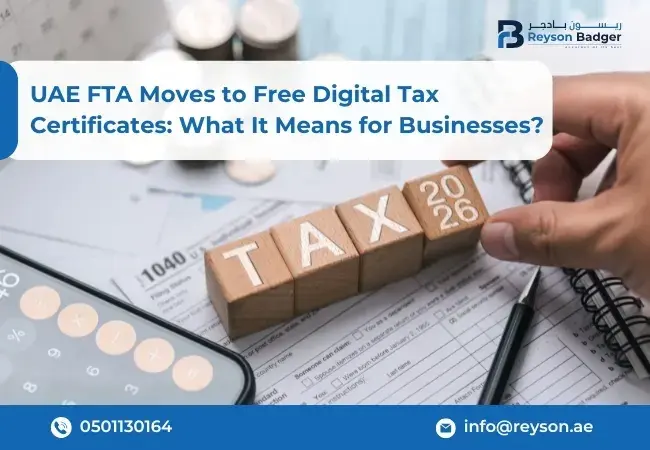


If you’ve ever applied for a tax registration certificate in the UAE, you already know the drill paperwork, processing time, and a small but unavoidable fee for a stamped paper document. That process is now officially part of the past.
The UAE’s Federal Tax Authority (FTA) has cancelled fees for paper-based tax certificates and replaced them with free digital tax registration certificates that come with QR codes for instant verification. This shift is more than a simple administrative update it reflects the UAE’s broader vision of becoming a fully digital, business-friendly government.
Let’s break down what this change means, why it matters, and how businesses can benefit from it.
From Paper to Digital: What Has Changed?
Under the new FTA framework, businesses registered for VAT services, Corporate Tax services, or other applicable tax regimes will now receive electronic tax registration certificates at no cost. These digital certificates are issued directly through the FTA’s online systems and include a QR code that allows instant verification of a company’s tax status.
Previously, many businesses paid additional fees to obtain certified paper copies of tax certificates for banking, licensing, or compliance purposes. With this update, the need for physical certificates and the fees attached to them has been eliminated.
In simple terms:
Everything is now digital, instant, and verifiable.
- No more waiting for printed certificates
- No more courier charges or physical storage
- No more certified physical paper documents
Why did the FTA introduce this change?
This move aligns closely with the UAE’s digital government strategy, which focuses on reducing bureaucracy, improving service efficiency, and making compliance easier for businesses.
By eliminating paper certificates, the FTA is:
- Reducing operational and compliance costs for companies
- Minimising manual processing and human error
- Encouraging wider adoption of digital government platforms
- Improving transparency through real-time verification
It also supports sustainability goals by cutting down on unnecessary paper usage — an increasingly important consideration for modern regulatory frameworks.
How QR Code Verification Helps Businesses?
One of the most practical improvements is the introduction of QR code verification on digital certificates.
Instead of submitting stamped documents or requesting certified copies, businesses can now simply:
- Share the digital certificate
- Allow third parties to scan the QR code
- Instantly confirm tax registration status directly from FTA systems
This is particularly useful when dealing with:
- Banks and financial institutions
- Free zone and mainland authorities
- Auditors and consultants
- Business partners and vendors
The result is faster approvals, fewer follow-ups, and smoother transactions.
What This Means for SMEs and Startups?
For small and medium-sized businesses, startups, and entrepreneurs, this update removes yet another friction point in regulatory compliance.
Cost savings may seem minor at first, but when combined with reduced processing time and simplified documentation, the overall impact is meaningful. Businesses can now focus more on operations and growth rather than administrative formalities.
It also makes the UAE an even more attractive destination for new investors and foreign-owned businesses, reinforcing its reputation for ease of doing business.
Do Businesses Need to Take Any Action?
In most cases, no immediate action is required. Existing registered businesses will automatically have access to their digital tax certificates through the FTA’s online portal.
However, it’s a good idea to:
- Update internal compliance records
- Inform banks, auditors, and partners about the shift to digital certificates
- Stop requesting paper certificates unless specifically required by legacy processes
As government entities and private institutions adapt, digital certificates with QR verification are expected to become the standard across the board.
A Small Change with a Big Impact
While cancelling fees for paper tax certificates may sound like a minor update, it represents something much larger a continued commitment by the UAE to modernise regulation, simplify compliance, and embrace digital-first governance.
For businesses, the benefits are clear: lower costs, faster verification, reduced paperwork, and a more seamless compliance experience. As Reyson Badger continues to advise businesses on navigating the UAE’s evolving tax and regulatory landscape, changes like this set the tone for what the future of business administration looks like—efficient, transparent, and fully digital.