Accounting Services in Dubai: A Practical Guide for Growing Companies
19-Jan-2026
Business Valuation Services in Riyadh
Business Valuation Services in Riyadh
Riyadh stands at the centre of Saudi Arabia’s economic transformation, serving as the financial, regulatory, and investment capital of the Kingdom. As the headquarters for government ministries, regulators, sovereign-linked entities, and major private groups, Riyadh plays a pivotal role in shaping business activity under Vision 2030.
The city attracts large family conglomerates, listed and unlisted corporates, and a growing number of foreign investors establishing or acquiring Saudi businesses. In this environment, business valuation is not merely a financial exercise; it is a regulatory, tax, and governance requirement. There is a strong demand for defensible, Saudi-compliant valuation reports that withstand scrutiny from regulators, investors, banks, and courts.

Why Business Valuation Is Critical in the Saudi Regulatory Environment?
Saudi Arabia’s regulatory framework places significant emphasis on transparency, fairness, and compliance. As a result, professional business valuation in Riyadh is often driven by regulation and stakeholder accountability.
Key valuation triggers include:
- ZATCA zakat and tax compliance, including ownership changes, restructuring, and related-party transactions
- Share transfers and ownership restructuring within family groups or holding companies
- Investor reporting and funding rounds, particularly for private equity and foreign investors
- Mergers and acquisitions are governed by Saudi corporate and commercial law
- Financial disputes, arbitration, and litigation, where independent valuation evidence is required
In these situations, valuations must be technically sound, well-documented, and aligned with Saudi legal and regulatory expectations.
Business Valuation Advisory for Riyadh-Based Enterprises
Our work in Riyadh is positioned as valuation advisory, not generic report preparation. We support businesses where valuation is central to high-stakes decision-making.
Our advisory experience covers:
- Saudi private companies, including family-owned and closely held businesses
- Foreign-owned and multinational entities operating under MISA and other investment frameworks
- Group structures and holding companies, including complex ownership and intercompany arrangements
- Government-linked and quasi-government projects, where valuation defensibility is critical
Each engagement begins with understanding the commercial objective, regulatory exposure, and stakeholder expectations behind the valuation.
Saudi-Compliant Valuation Methodology & Approach
Valuation in Saudi Arabia requires careful alignment with both international standards and local regulatory realities.
Our approach is structured to ensure:
- Consistency with internationally recognised valuation principles
- Alignment with Saudi corporate law and regulatory expectations
- Defensibility for zakat and tax purposes under ZATCA review
- Acceptance by investors, banks, and transaction counterparties
Within this framework, valuation approaches are applied contextually:
- Income-based valuation for operating businesses with measurable cash flows
- Market-based valuation for investment benchmarking and transaction support
- Asset-based valuation for regulated, capital-intensive, or asset-driven sectors
The emphasis is always on relevance, documentation, and auditability rather than mechanical model application.
Valuation for Key Transactions in Saudi Arabia
Business valuation in Riyadh is frequently transaction-driven, supporting critical corporate and investment events such as:
- Mergers and acquisitions, including buy-side and sell-side transactions
- Share transfers and partner exits, ensuring fair value determination
- Private equity and venture capital investments, including entry and exit pricing
- Business restructuring and reorganisation, within groups or family holdings
- Litigation and dispute resolution, where independent valuation opinions are required
In each case, valuation serves as a cornerstone for negotiation, compliance, and risk mitigation.
Sector-Specific Valuation Expertise in Riyadh
Riyadh’s diversified economy requires sector-aware valuation insight. Our experience spans industries that are central to the city’s growth and Vision 2030 priorities, including:
- Construction and infrastructure, including government and PPP projects
- Healthcare and education, across private operators and institutional investors
- Technology and startups, including early-stage and scale-up valuations
- Manufacturing and industrials, particularly asset-intensive operations
- Professional services firms, where goodwill and partner structures matter
- Government-related and regulated projects, requiring heightened scrutiny
This sector focus ensures valuation assumptions reflect operational and regulatory realities.
Compliance, Reporting & Documentation Standards
All valuation engagements are delivered with a strong emphasis on compliance and credibility.
Our valuation reports are suitable for use by:
- ZATCA, for zakat and tax-related matters
- Saudi and regional banks, for financing and credit assessment
- Investors and shareholders, for transaction and governance decisions
- Courts, arbitrators, and legal advisors, for disputes and litigation
Reports include clear assumptions, transparent methodologies, and comprehensive disclosures, ensuring confidentiality, independence, and defensibility.
Why Riyadh Businesses Choose Reyson Badger?
Riyadh-based businesses and investors choose Reyson Badger for our advisory-led approach to business valuation. We bring deep experience in the Saudi regulatory and compliance landscape, combined with strong cross-border UAE-KSA valuation expertise that supports regional and international investors. Our valuation reports are independent, defensible, and designed to meet regulatory scrutiny while addressing commercial realities. By taking a bespoke advisory approach tailored to each transaction and stakeholder requirement, Reyson Badger delivers valuation insights that support regulatory compliance, informed strategic decision-making, and successful transaction outcomes.
Frequently Asked Questions
1. Is business valuation required for zakat or tax purposes in Saudi Arabia?
Valuation is often required for zakat and tax-related matters, particularly during share transfers, restructuring, or related-party transactions reviewed by ZATCA.
2. Can valuation reports be used for Saudi M&A transactions?
Yes. Professionally prepared valuation reports are commonly used to support negotiations, fairness assessments, and regulatory submissions in M&A transactions.
3. Are valuation reports accepted by Saudi banks?
Yes. Banks typically require independent valuation reports for financing, restructuring, and credit assessment purposes.
4. Do foreign investors need a valuation before acquiring a Saudi company?
In most cases, yes. Valuation supports pricing, regulatory compliance, and investor due diligence when acquiring or investing in Saudi entities.
Accounting
Accounting Services for Industries
- Engine Manufacturing
- Pharmaceutical Manufacturing Industry
- Accounting Services For Bread Manufacturing Units in Dubai
- Manufacturing Sector in UAE
- Accounting For Tobacco And Cigarette Manufacturing Industry in Dubai
- Iron and Steel Casting Industry
- Accounting for Marine Companies in UAE
- Accounting Services for Insurance Companies in UAE
- Accounting Services for Construction Companies in UAE
- Accounting Services for Event Management in UAE
- Accounting Services for Oil and Gas
- Accounting Services for Real Estate in UAE
- Accounting Services for Restaurants in UAE
- Accounting services for E-Commerce
- Accounting Services for Technology in UAE
Business Valuation Services in Dubai, UAE
- Due Diligence Services in Dubai, UAE
- Feasibility Study Services in Dubai, UAE
- Market Research Companies in Dubai
- Mergers and Acquisitions in Dubai
- Business Valuation Services in Ajman
- Business Valuation Services in Ras Al Khaimah
- Business Valuation Services in Fujairah
- Business Valuation Services in Umm Al Quwain
- Business Valuation Services in Riyadh
- Feasibility Study Services in Ras Al Khaimah
- Mergers and acquisitions in Ajman
- Business Valuation Services in Sharjah








Latest Blogs

22
Jan
Accounts Outsourcing Services in Dubai: What Every Business Owner Should Know
Accounts Outsourcing Services in Dubai cover essential finance functions through a structured and professional workflow, compliant, and financially organized.
READ MORE →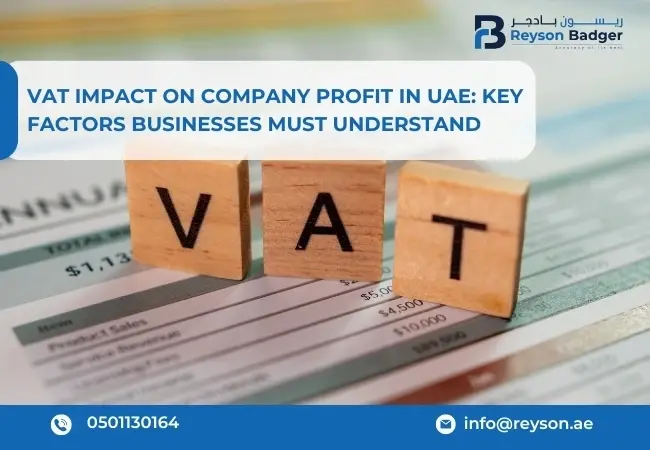
19
Jan
VAT Impact on Company Profit in UAE: Key Factors Businesses Must Understand
Explore how VAT impacts company profit in the UAE, including compliance costs, pricing strategies, and the role of professional VAT services for businesses.
READ MORE →
19
Jan
Understanding VAT Refund Rules for Tourists in UAE Under FTA Guidelines
This guide explains VAT refund rules for tourists in the UAE, including eligibility, qualifying purchases, refund process, and key FTA guidelines to claim VAT refund in UAE.
READ MORE →
22
Jan
Why AML Checks Are More Important Than Ever in 2026?
Learn why AML compliance is vital in 2026. Avoid fines, protect your business, and meet new regulatory standards with strong AML checks.
READ MORE →
23
Jan
VAT Registration Threshold in UAE: Requirements, Calculation, and Compliance
READ MORE →
22
Jan
Amendment of the United Arab Emirates (UAE) VAT Decree-Law from 1st January 2026
UAE VAT Decree-Law amendments effective 2026 explained, including reverse charge updates, refund time limits, and enhanced FTA authority.
READ MORE →
19
Jan
Accounting Services in Dubai: A Practical Guide for Growing Companies
Accounting services in UAE, businesses gain clarity, confidence, and control over their finances allowing them to focus on what matters most: building and scaling their business in the UAE's competitive market.
READ MORE →
23
Jan
Corporate Tax Advance Pricing Agreements in the UAE
Advance Pricing Agreements (APAs) in the UAE help businesses obtain certainty on transfer pricing methods under the Corporate Tax regime. Learn how APAs work, eligibility criteria, benefits, and compliance requirements set by the UAE Federal Tax Authority
READ MORE →
23
Jan
UAE FTA Moves to Free Digital Tax Certificates: What It Means for Businesses?
The UAE FTA now offers free digital tax registration certificates with QR codes, eliminating paper fees and simplifying compliance for businesses.
READ MORE →
21
Jan
UAE FTA Removes Fees for Paper Tax Certificates, Moves to Free Digital Certificates
UAE Federal Tax Authority removes fees for paper tax certificates and introduces free digital certificates with QR codes from January 2026.
READ MORE →